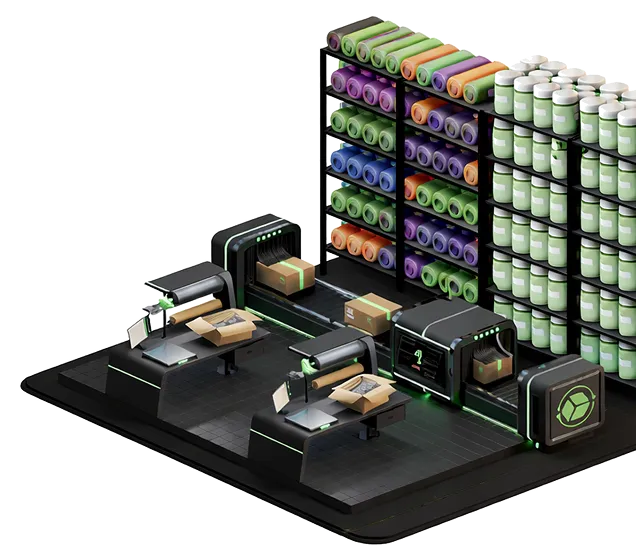
A side-by-side comparison
Atomix vs Other 3PLs
A modern fulfillment partner built for brands comparing multiple 3PL options and looking for consistency, transparency, and operational ownership.
  • Dedicated fulfillment pods instead of shared teams
  • Transparent pricing built for growth
  • Migration managed end to end

Why brands compare to multiple 3PLs

Choosing a 3PL is rarely about a single competitor.
Most teams evaluate several models before deciding.
Different providers specialize in different workflows
Technology visibility does not always reflect execution
Pricing structures vary widely across 3PLs
Scaling readiness becomes a key decision factor

How Atomix compares to common 3PL models

Most 3PL providers fall into a few structural categories.
The differences shape the fulfillment experience.
Other 3PLs
Atomix Logistics
Core Model Platform driven, managed service, or specialized Brand-driven pod model
Team Structure Shared teams or account structures Dedicated fulfillment pods
Pricing Approach Flat, tiered, or service layered Transparent line-item pricing
Workflow Flexibility Depends on provider specialization Custom operational workflows
Support Experience Ticket or account manager based Direct pod ownership and communication
Onboarding Standard onboarding Guided migration w/ 1:1 Slack communication
DTC + B2B Often siloed capabilities Integrated DTC + B2B model
Visibility Platform reporting focused Real-time operational visibility
Other 3PLs
Atomix Logistics
Core Model
Platform driven, managed service, or specialized
Brand-driven pod model
Team Structure
Shared teams or account structures
Dedicated fulfillment pods
Pricing Approach
Flat, tiered, or service layered
Transparent line-item pricing
Workflow Flexibility
Depends on provider specialization
Custom operational workflows
Support Experience
Ticket or account manager based
Direct pod ownership and communication
Onboarding
Standard onboarding
Guided migration w/ 1:1 Slack communication
DTC + B2B
Often siloed capabilities
Integrated DTC + B2B model
Visibility
Platform reporting focused
Real-time operational visibility
ShipBob
Structure
Shared warehouse teams across brands
Dedicated fulfillment pods per brand
Pricing
Standardized pricing model
Transparent line-item pricing
Accuracy Approach
Process driven workflows
2-step scan verification
Support Experience
Centralized support model
Direct pod communication and ownership
Flexibility
Standardized workflows
Custom workflows supported
Onboarding
Structured onboarding
Guided migration with brand support
DTC + B2B
Supported
Supported w/ strong multi-channel focus
Operational Visibility
Dashboard reporting
Real-time operational visibility

Different models serve different stages

Many providers are built around specific priorities such as specialization, software, or managed service.
Some 3PLs focus on niche strengths, such as over sized items, Amazon fulfillment, or retail distribution. Others emphasize software visibility or standardized processes.
Atomix is designed as an operational partnership model. The pod structure creates consistency, clearer ownership, and a fulfillment experience that scales with complexity rather than requiring model changes.

Moving from any 3PL can be
structured and predictable

Brands evaluating multiple providers often worry about transition risk more than provider selection.
  • Workflow mapping from current provider
  • Integration setup and testing support
  • Inventory transition planning
  • Parallel run support when needed
  • Dedicated onboarding specialist
Zainab M.
Atomix Onboarding Specialist
When brands choose Atomix
after comparing multiple 3PLs
Teams evaluating several providers often prioritize
consistency and scalability over specific features.
Operational Ownership
Brands gain a dedicated team that actively manages fulfillment performance, not just executes tasks.
Real Visibility
Teams see real time inventory, order status, and operational insights without relying on support tickets.
Workflow Flexibility
Fulfillment processes adapt to your product, channels, and packaging requirements instead of forcing standardization.
Faster Communication
Direct access to operations enables quicker decisions and faster issue resolution as volume grows.
Scalable Infrastructure
Infrastructure is designed to support SKU growth, channel expansion, and increasing order complexity.
Consistent Execution
Standardized processes and dedicated teams create predictable performance even during rapid growth.

Pricing built for cross
provider comparison

Pricing models vary widely across fulfillment providers, which makes forecasting difficult.
Some providers use flat pricing, others layer services, and marketplace fulfillment introduces additional fee structures.
Atomix focuses on transparent pricing aligned to how fulfillment runs so brands can compare providers more clearly and forecast long term costs.

Built for modern
ecommerce operators

Atomix supports brands across beauty, wellness,
food, and high-growth DTC categories.
  • Dedicated pod model per brand
  • 2-step scan accuracy approach
  • Dock-to-stock speed targets
  • Slack onboarding and direct communication
  • Ongoing operational reviews
Comparing multiple 3PL providers?
Understand the differences between fulfillment models,
explore pricing, and evaluate what switching would look like.
Common questions when
comparing multiple 3PL providers

How do I choose the right 3PL model?

It depends on complexity, growth plans, and operational priorities.

Can Atomix support complex workflows?

Yes, custom operational workflows are supported.

Do brands need to switch everything at once?

Many brands transition inventory in phases.

Does Atomix support DTC and B2B?

Yes, both are supported within one model.

How should pricing be compared across providers?

Evaluate long term predictability, not only entry pricing.