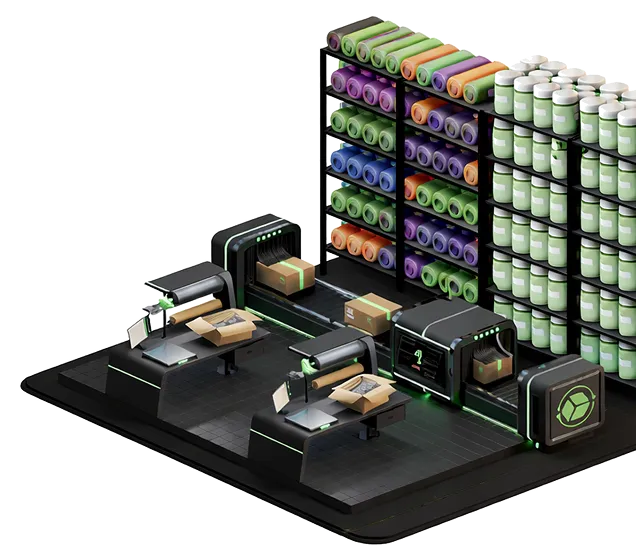
A side-by-side comparison
Atomix vs Shipbob
Atomix is a modern 3PL designed for brands that want more consistency,
clearer pricing, and a dedicated operational partner as they scale.
  • Dedicated fulfillment pods instead of shared warehouse labor
  • Transparent, line-item pricing built for scale
  • Migration managed end to end

Why brands begin exploring alternatives to ShipBob

ShipBob works well for many brands early on. As operations grow, teams
often start looking for more predictability and operational ownership.
Brands look for faster, more direct operational support
Pricing clarity becomes more important at higher volume
Operators want visibility without building their own warehouse
Workflows become more complex as SKUs and channels expand

Atomix and ShipBob compared

Both providers support fast ecommerce fulfillment. The difference
is in operational structure and how brands experience scale.
ShipBob
Atomix Logistics
Structure Shared warehouse teams across brands Dedicated fulfillment pods per brand
Pricing Standardized pricing model Transparent line-item pricing
Accuracy Approach Process driven workflows 2-step scan verification
Support Experience Centralized support model Direct pod communication and ownership
Flexibility Standardized workflows Custom workflows supported
Onboarding Structured onboarding Guided migration with brand support
DTC + B2B Supported Supported w/ strong multi-channel focus
Operational Visibility Dashboard reporting Real-time operational visibility
ShipBob
Atomix Logistics
Structure
Shared warehouse teams across brands
Dedicated fulfillment pods per brand
Pricing
Standardized pricing model
Transparent line-item pricing
Accuracy Approach
Process driven workflows
2-step scan verification
Support Experience
Centralized support model
Direct pod communication and ownership
Flexibility
Standardized workflows
Custom workflows supported
Onboarding
Structured onboarding
Guided migration with brand support
DTC + B2B
Supported
Supported w/ strong multi-channel focus
Operational Visibility
Dashboard reporting
Real-time operational visibility
ShipBob
Structure
Shared warehouse teams across brands
Dedicated fulfillment pods per brand
Pricing
Standardized pricing model
Transparent line-item pricing
Accuracy Approach
Process driven workflows
2-step scan verification
Support Experience
Centralized support model
Direct pod communication and ownership
Flexibility
Standardized workflows
Custom workflows supported
Onboarding
Structured onboarding
Guided migration with brand support
DTC + B2B
Supported
Supported w/ strong multi-channel focus
Operational Visibility
Dashboard reporting
Real-time operational visibility

Operational structure
matters as brands scale

Many brands evaluating ShipBob alternatives are looking
for more consistency in how their fulfillment runs.
Shared warehouse environments can work well for standard workflows. As brands grow, operators often look for clearer ownership, faster decision making, and more predictable execution.
Atomix uses a pod model where each brand operates within a dedicated team structure. This creates more consistency, clearer accountability, and a fulfillment experience that feels closer to an in-house operation.

Switching from ShipBob can be
structured and predictable

A common concern when comparing providers is migration risk. Atomix is designed to manage the transition collaboratively.
  • Integration setup and testing guided by onboarding specialists
  • Inventory transition planning and coordination
  • Parallel run support when needed
  • Clear onboarding milestones and timelines
  • Dedicated onboarding ownership
Zainab M.
Atomix Onboarding Specialist
When brands choose Atomix after ShipBob
Different fulfillment models serve different stages. Atomix is built
for teams that want operational partnership as they grow.
Scaling Complexity
Scaling DTC brands managing higher order complexity often choose Atomix for structure and consistency.
Workflow Flexibility
Teams that want more workflow flexibility choose Atomix for adaptable operational processes.
Omnichannel Growth
Brands running both DTC and wholesale channels choose Atomix for coordinated execution.
Visibility & Control
Operators prioritizing visibility and control choose Atomix for clearer operational insight.
Faster Communication
Brands that value faster operational communication choose Atomix for responsive support.
Expansion Ready
Companies planning rapid SKU or channel expansion choose Atomix for scalable infrastructure.

Predictable, Transparent Pricing

One of the most common reasons brands compare ShipBob alternatives is cost visibility as volume increases.
Atomix focuses on transparent pricing that helps operators understand how fulfillment costs evolve with growth. This supports forecasting and reduces surprises.
Rather than optimizing for entry pricing alone, the model is designed to provide clarity as operations become more complex.

Built for modern
ecommerce operators

Atomix supports brands across beauty, wellness, food, and high-growth DTC categories.
  • Dedicated pod model per brand
  • 2-step scan accuracy approach
  • Dock-to-stock speed targets
  • Slack onboarding and direct communication
  • Ongoing operational reviews
Thinking about moving beyond ShipBob?
Compare fulfillment models, explore pricing, and understand
what switching would look like for your brand.
Common questions when
comparing Atomix and ShipBob

How long does switching from ShipBob take?

Timelines vary, but onboarding follows a structured roll out plan. Most brands can switch over the course of 2-4 weeks.

Do you support my integrations?

Atomix supports major ecommerce platforms and tools.

Can Atomix handle DTC and B2B?

Yes, Atomix supports both within the same operational model.

Do brands need to move inventory all at once?

Many teams transition inventory in phases.

How does pricing compare as brands scale?

Pricing depends on volume and complexity, with a focus on clarity and predictability.