On-Demand Fulfillment: What It Means, How It Differs From a 3PL, and When It Fits

On-demand fulfillment means your orders are picked, packed, and shipped as they come in, from inventory you already own, using a provider's warehouse space and labor instead of your own building. The term is used for three different things: on-demand warehousing networks that rent space short-term, 3PLs that ship orders the same day they arrive, and print-on-demand, where the product is made after the order. Which one you mean decides the cost structure, the commitment, and how much control you keep.
Updated October 2026: rewritten to separate the three meanings of on-demand fulfillment, correct an earlier claim that it removes the need to buy inventory, and add a decision table.
What is on-demand fulfillment?
In ecommerce, on-demand fulfillment is order fulfillment triggered by each order rather than by a fixed schedule: the order syncs from your store to the provider, stock is allocated, and the parcel ships, usually the same or next business day. You still buy and hold inventory. What you avoid is leasing a warehouse, hiring a packing team, and negotiating carrier contracts yourself.
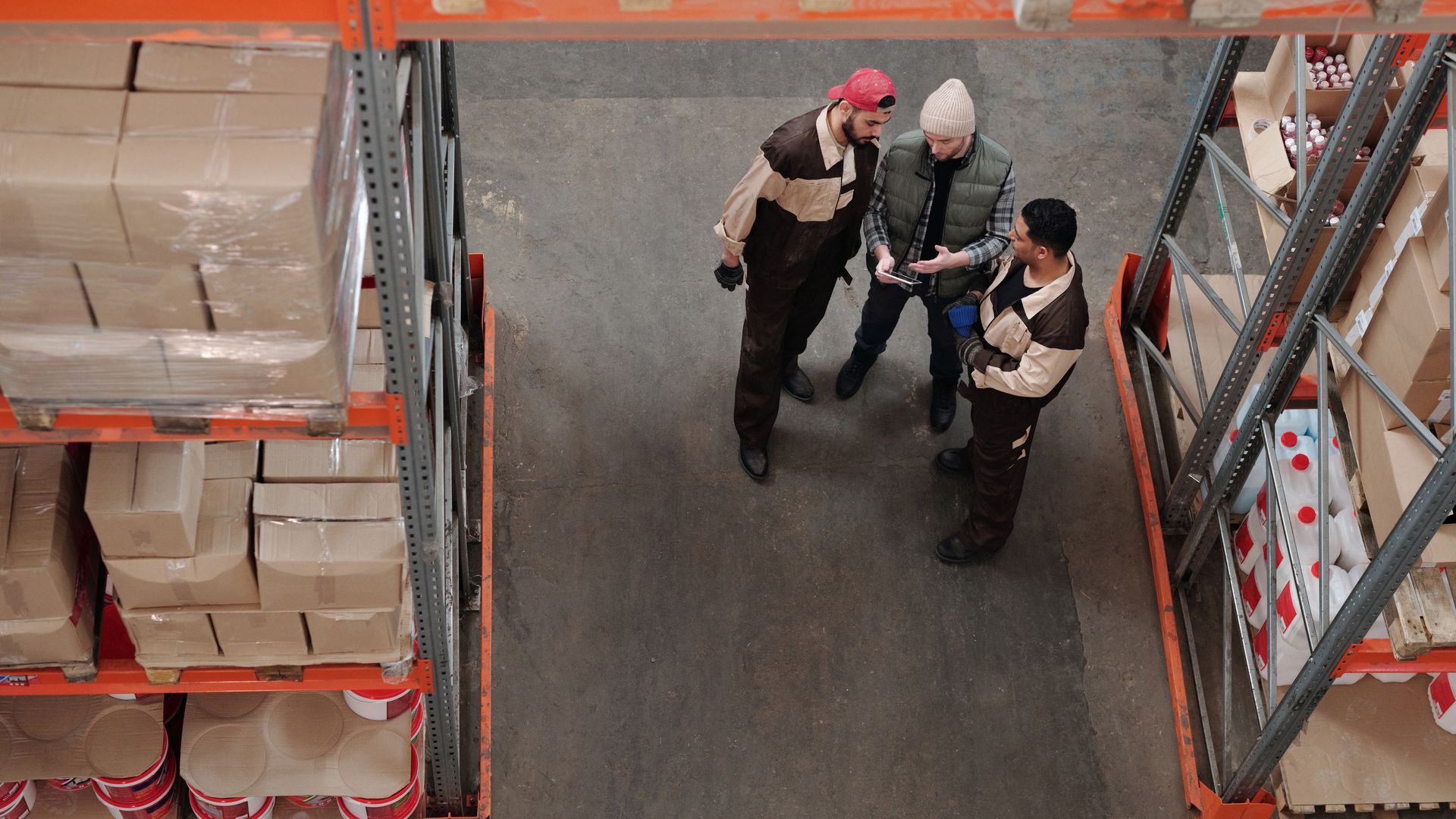
An on-demand warehouse is a narrower idea. Inbound Logistics defines it as storage that businesses rent only when needed, on a short-term basis, paying for the space and services they use, often with no long-term commitment. Flexe is one example of a flexible warehousing network built on that model.
Is on-demand fulfillment the same as print-on-demand or dropshipping?
No. In print-on-demand and dropshipping, nobody holds finished inventory for you; the product is made or shipped by a supplier after the order. In on-demand fulfillment and 3PL fulfillment, your finished inventory sits in a warehouse and ships from there. An earlier version of this article said on-demand fulfillment removes the need to buy inventory in bulk. That is true of print-on-demand, not of on-demand fulfillment.
| Model | Who holds finished inventory | Typical commitment | Best for | Main trade-off |
|---|---|---|---|---|
| In-house fulfillment | You, in your own space | Your lease and staff | Very low volume or highly custom orders | Founder time and fixed costs |
| On-demand warehousing network | Network warehouses, space rented as needed | Short-term, often no long-term contract | Seasonal overflow, market tests, temporary distribution points | Less consistent teams and processes across sites |
| Dedicated 3PL | The 3PL, in its warehouses | Service agreement, often 12 months | Steady DTC, B2B, and marketplace volume needing consistent execution | Longer commitment |
| Print-on-demand | No one; items are made per order | Per-order pricing | Custom-printed apparel, art, and merchandise | Higher unit cost and longer production time |
| Dropshipping | Your supplier | Supplier terms | Testing catalog breadth without inventory | Little control over packaging, speed, and quality |
For a deeper comparison of made-to-order versus stocked inventory, see print on demand vs. 3PL fulfillment.
How does an order move through on-demand fulfillment?
- Order sync. The order passes from your storefront or marketplace to the provider's system through an integration.
- Allocation. The system checks available stock and assigns the order to a warehouse; with several locations, routing usually picks the one closest to the customer.
- Pick and pack. Staff pick the units, scan them to confirm the right items, and pack them with your materials and inserts.
- Label and carrier. The system rate-shops carriers and services and prints the label.
- Tracking writeback. The tracking number returns to your store, which notifies the customer and updates inventory counts.
The speed promise depends on the cutoff: the time by which an order must arrive to ship that day. Ask every provider for its cutoff in writing. Our same-day shipping guide explains how cutoffs, carriers, and pickup times interact.
When does on-demand warehousing make sense, and when is a dedicated 3PL better?
Short-term warehouse space fits needs that are temporary by nature: absorbing a Q4 surge beyond your main warehouse's capacity, testing a new region before committing inventory there, or staging stock for a retail launch. A dedicated 3PL fits steady, recurring volume where the same team learns your SKUs, kitting rules, packaging, and retail compliance requirements, and where written service guarantees matter more than the shortest possible commitment. Many brands use both: a dedicated 3PL as the main operation and flexible space for overflow. If you are planning for peaks, see how to handle seasonal demand peaks.
What should you check before choosing an on-demand fulfillment provider?
- Cutoff times and ship days. When must an order arrive to leave the same business day?
- Receiving speed. How long from your inbound delivery to sellable stock?
- Written guarantees. What happens, financially, if orders ship late or wrong?
- Integrations. Does it connect natively to every channel you sell on?
- Commitment and minimums. What is the term, and are there monthly minimums?
- Billing transparency. Can you see every line item behind an invoice? Our 3PL cost breakdown shows what each line should cover.
How does Atomix Logistics fit?
Atomix Logistics is a dedicated 3PL, not a short-term space marketplace. Brands store inventory across Atomix warehouses in the Milwaukee area, Salt Lake City, and Baltimore, and orders received before the cutoff (12 PM local for express, 1 PM local for ground and economy) ship the same business day. Each brand works with a dedicated Pod, a consistent team led by an on-site Pod Manager. Atomix publishes written guarantees paid as credits, including $5 per order per day late on on-time shipping and $25 per incorrect line item on billing accuracy, and reports a historical average dock-to-stock time of 48 hours or less. Partnerships run on a 12-month term. See Atomix pricing to compare.
Frequently asked questions
What is on-demand fulfillment in ecommerce?
On-demand fulfillment is order fulfillment triggered by each order: the order syncs from your store to a provider, stock is allocated, and the parcel is picked, packed, and shipped, usually the same or next business day. You still own the inventory; the provider supplies the warehouse space, labor, and carrier access.
Does on-demand fulfillment mean I don't need to buy inventory?
No. That describes print-on-demand or dropshipping, where products are made or shipped by a supplier after the order. With on-demand fulfillment and 3PL fulfillment, you buy finished inventory and store it in the provider's warehouse, which is why shipping can be fast and packaging can be branded.
What is an on-demand warehouse?
An on-demand warehouse is storage a business rents only when needed, on a short-term basis, paying for the space and services it uses, often without a long-term commitment. It suits seasonal overflow, regional market tests, and temporary distribution points better than steady year-round volume.
Is a dedicated 3PL better than on-demand warehousing?
It depends on the volume pattern. For steady, recurring volume, a dedicated 3PL offers a consistent team, learned processes, and written service guarantees, usually in exchange for a longer term. For temporary needs, on-demand space avoids that commitment. Many brands use a dedicated 3PL as the base and flexible space for overflow.
Does Atomix offer on-demand fulfillment?
Atomix is a dedicated 3PL that ships orders as they arrive: orders received before 12 PM local for express or 1 PM local for ground ship the same business day from its Milwaukee-area, Salt Lake City, or Baltimore warehouses. It is not a short-term space marketplace; partnerships run on a 12-month term with a dedicated Pod team.