Warehouse Process Optimization: Complete Guide to Streamlining Your Order Fulfillment Workflow
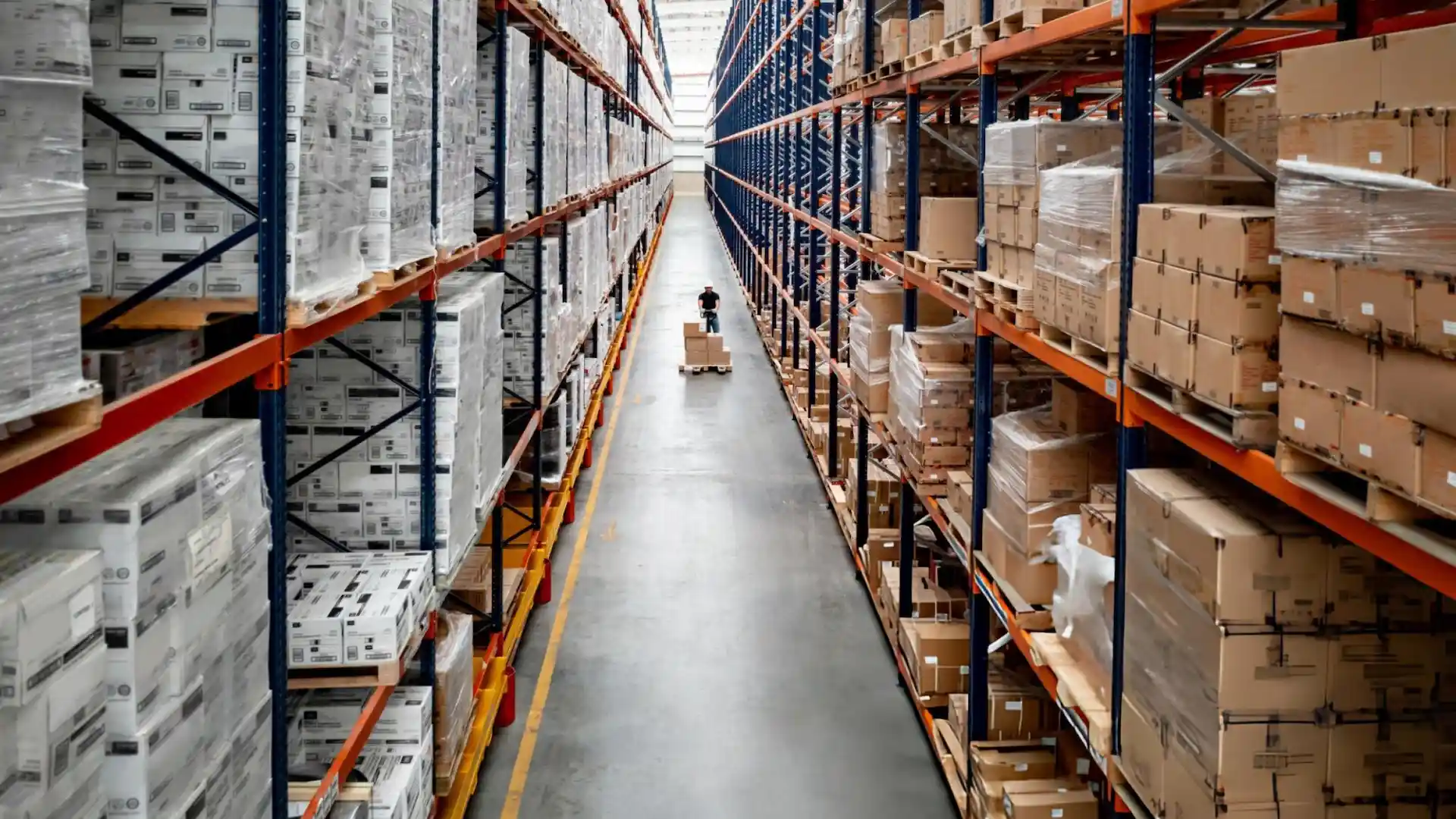
Understanding and optimizing your warehouse process is essential for ecommerce success. Whether you're managing your own facility or partnering with a 3PL fulfillment provider, mastering warehouse operations directly impacts customer satisfaction, operational costs, and business growth.
In this comprehensive guide, Atomix Logistics breaks down the critical components of an effective warehouse process, explores strategies to optimize your order fulfillment workflow, and shows you how to build a more efficient, cost effective operation.
What is a Warehouse Process?
A warehouse process encompasses all activities involved in receiving, storing, picking, packing, and shipping inventory. Think of it as the backbone of your order fulfillment workflow. It includes everything from the moment products arrive at your loading dock to when they're delivered to customers.
When you get your warehouse process right, operations run smoothly, errors drop, costs go down, and your customers get exactly what they ordered, when they expect it.
8 Critical Steps in the Warehouse Process
1. Receiving Inventory
The warehouse process begins when inventory arrives at your facility. During receiving, warehouse staff unload products from trucks, verify quantities against purchase orders, inspect items for damage, and document everything in your inventory management system.
Getting this step right from the start prevents costly mistakes down the line. Many successful ecommerce brands use barcode scanning technology during this stage to speed things up and catch errors before they become problems.
2. Put-Away and Storage
After receiving, products need to go somewhere. This is where your put away strategy comes into play, and it can make or break your downstream efficiency.
Think strategically about where you store things. Consider factors like how quickly items sell, their size, weight, and any special handling requirements. Your bestsellers should be in easy to reach spots so your team can grab them quickly, while slower moving inventory can hang out in less accessible areas.
3. Inventory Management and Organization
Knowing exactly what you have and where it is at all times is crucial. Modern warehouse management systems give you live inventory counts across multiple locations, so you can make smarter decisions about restocking, forecasting demand, and getting products where they need to be.
If you're working with a 3PL fulfillment partner, their inventory management software connects with your sales channels and automatically updates stock levels as orders come in and get shipped out. This means you won't accidentally sell something you don't have, and you'll always know when it's time to reorder.
4. Order Processing
The moment a customer clicks "buy," your warehouse process springs into action. Order processing starts as soon as an order hits your system, creating pick lists and routing instructions for your warehouse team.
Smart order fulfillment software can group similar orders together, figure out the most efficient picking routes, and prioritize orders based on shipping deadlines or how quickly different customers expect their packages.
5. Picking
This is where a lot of the hard work happens. Pickers walk through the warehouse grabbing products from their storage spots based on pick lists or instructions from the warehouse management system.
There are several ways to handle picking, and the best method depends on your specific situation:
Zone picking: Each picker covers a specific area of the warehouse Wave picking: Orders get picked in scheduled batches throughout the day Batch picking: Your team picks multiple orders at the same time Piece picking: Items are selected one at a time for individual orders
The right approach depends on how many orders you process, how many different products you carry, and how your warehouse is laid out. Many 3PL shipping providers use fancy tech like voice picking or light guided systems to pick faster and more accurately.
6. Packing and Quality Control
Once items are picked, they head to packing stations where they get boxed up and ready to ship. The packing stage covers a lot of ground:
Choosing the right box or mailer for the job, adding bubble wrap or other protection so nothing breaks in transit, throwing in any branded materials or thank you notes, slapping on shipping labels with all the carrier and tracking details, and doing one last check to make sure everything is correct.
This is your last chance to catch any mistakes before packages leave your building. A quick quality control check here saves you from dealing with returns and unhappy customers later.
7. Shipping and Carrier Management
The final step is handing packages off to shipping carriers. Whether you work with USPS, FedEx, UPS, or regional carriers, smart carrier management means packages get to customers quickly without breaking the bank.
The best fulfillment services use rate shopping technology that automatically picks the cheapest shipping option that still meets your delivery promises. And if you ship a lot of packages, negotiating better rates with carriers or partnering with a 3PL that already has volume discounts can save you serious money.
8. Returns Processing
Let's be honest, returns are part of the game in ecommerce. A good returns process means receiving returned items, checking if they can go back on the shelf, updating your inventory system, and processing refunds or exchanges.
Top 3PL fulfillment providers handle returns as part of their standard service, which frees you up to focus on growing your business while making sure returned products get back in stock and ready to sell again as quickly as possible.
Key Benefits of Optimizing Your Warehouse Process
Reduced Operating Costs
When you streamline your warehouse process, you cut out wasted time, reduce labor hours, and make fewer costly mistakes. Most businesses see their fulfillment costs drop by 15 to 30% after optimizing their workflows.
Faster Order Fulfillment
Efficient warehouse operations mean shorter order cycle times. When your order fulfillment workflow runs like a well oiled machine, customers get their orders faster. And happy customers become repeat customers.
Improved Inventory Accuracy
A solid warehouse process with checks at every stage keeps your inventory accuracy above 99%. That means no more overselling products you don't have or running out of stock when you thought you had plenty.
Enhanced Scalability
When your warehouse processes are dialed in, scaling gets a lot easier. Whether you're processing 100 orders a day or 10,000, good systems keep everything running smoothly.
Better Customer Experience
At the end of the day, every improvement to your warehouse process makes your customers happier. Accurate orders, fast shipping, and nice packaging all add up to more five star reviews and loyal customers.
Strategies for Warehouse Process Optimization
Implement Warehouse Management Software
Getting good order fulfillment software or a full warehouse management system gives you eyes on every part of your warehouse process in real time. Modern systems offer things like automatic order routing that figures out the best picking routes, live inventory tracking across all your locations, connections to your ecommerce platforms and sales channels, dashboards that show you how everything is performing, and tools to track your team's productivity.
If you're running your own warehouse, investing in this kind of technology is pretty much essential if you want to compete with bigger players who already have sophisticated fulfillment services.
Optimize Your Warehouse Layout
How you organize your physical space makes a huge difference in warehouse efficiency. Think about things like putting your fastest moving products in the easiest spots to reach, arranging your receiving, storage, picking, packing, and shipping areas so people aren't walking all over the place, using clear and scannable labels for every storage spot, and keeping aisles clear and equipment areas clearly marked for safety.
Regular warehouse audits help you spot bottlenecks and figure out where you can improve your layout.
Automate Repetitive Tasks
Automation technology can handle the boring, repetitive stuff in your warehouse process, freeing up your team to focus on tasks that actually need human judgment. You've got options like conveyor systems to move products between areas, automated sorting equipment, robotic picking systems, automated packing stations, and automatic label printing.
Big automation projects require significant investment, but even small automations like barcode scanning and automatic label generation make a real difference in efficiency.
Partner with a 3PL for Comprehensive Fulfillment Services
A lot of ecommerce brands find that working with a 3PL fulfillment provider just makes more sense financially and operationally than running their own warehouse. Professional 3PL services give you things like warehouses in multiple locations so you can keep inventory closer to customers, proven warehouse processes that come from years of experience and continuous improvement, the ability to easily scale up or down based on seasonal demand, lower shipping costs thanks to negotiated carrier rates and smart inventory distribution, and access to enterprise level order fulfillment software without having to buy it yourself.
Atomix Logistics specializes in providing flexible 3PL shipping and warehouse solutions that help growing ecommerce brands scale without all the headaches of managing their own facilities.
Focus on Data Driven Decision Making
You need to track the right numbers throughout your warehouse process. Things like how often you get orders right, how long it takes to pick each order, how many orders you can ship per hour, what percentage of your inventory counts are accurate, how long it takes from order to shipment, how much shipping costs per order, and what your return rate looks like.
Looking at these metrics regularly helps you spot trends, find opportunities to improve, and see whether the changes you make actually work.
Invest in Staff Training
Your warehouse process is only as good as the people running it. Good training programs make sure everyone understands the right procedures, knows how to stay safe, and can use your warehouse technology effectively. Training people to handle multiple jobs also gives you flexibility when things get busy.
Warehouse Process Management for Different Business Models
Direct to Consumer (DTC) Ecommerce
DTC brands usually process lots of individual orders with pretty simple pick lists. Your warehouse process should focus on speed and accuracy for single item or small orders, with packing that creates a great unboxing experience.
B2B and Wholesale Fulfillment
Business to business order fulfillment workflows often mean bigger shipments, picking full pallets instead of individual items, and different paperwork requirements. Your warehouse processes need to be flexible enough to handle both ecommerce shipping of individual items and wholesale orders of full cases or pallets.
Omnichannel Retail
Brands selling through multiple channels like your own online store, marketplaces, and physical retail locations need inventory management that works across all of them. You should be able to fulfill orders from anywhere. Your warehouse process has to handle both traditional ecommerce fulfillment and getting products out to retail stores.
Subscription Box Services
Subscription based businesses have their own unique warehouse process needs. You're dealing with kitting (putting multiple products together into subscription boxes), managing recurring shipment schedules, and handling all the different subscription variations customers want. Specialized fulfillment services can take care of all the complexity that comes with subscription logistics.
Choosing the Right Fulfillment Strategy
When evaluating your warehouse process options, consider these key factors:
In-House vs. 3PL Fulfillment
In house fulfillment gives you total control over your warehouse process and might be cost effective if you have predictable and steady order volumes, products that need special handling, customers mostly in one area, or money to invest in warehouse space, equipment, and staff.
3PL fulfillment offers scalability, geographic reach, and expertise, making it perfect for businesses with demand that goes up and down or changes by season, fast growth, customers spread across the country or world, or limited money for warehouse infrastructure.
Plenty of successful ecommerce brands start handling fulfillment themselves and switch to 3PL services as they grow. Some use a mix of both approaches.
Evaluating 3PL Fulfillment Providers
If you're thinking about 3PL shipping and fulfillment services, check potential partners on things like where their fulfillment centers are located and if they cover your customer base, what their order fulfillment software can do and whether it connects with your systems, how they charge you (storage fees, pick and pack fees, shipping rates), whether they can handle your growth and seasonal spikes, if they handle returns and inventory management, their track record with businesses like yours, and how their customer service and account management work.
Atomix Logistics offers transparent pricing, strategically located fulfillment centers, and flexible services designed to support ecommerce growth without sacrificing service quality.
Technology Driving Modern Warehouse Processes
Cloud Based Warehouse Management Systems
Modern cloud based systems let you see what's happening in your warehouse from anywhere, connect easily with your ecommerce platforms, and get automatic updates with new features.
Inventory Management Software
Standalone or integrated inventory management tools help you keep accurate stock counts, automatically reorder when you're running low, forecast demand, and track inventory across multiple locations or 3PL fulfillment centers.
Order Management Systems
Order management software handles the entire order fulfillment workflow from when someone places an order all the way through delivery. It figures out the best fulfillment location to ship from and coordinates everything with carriers.
Integration Capabilities
The best order fulfillment software connects seamlessly with everything else you're already using. That includes ecommerce platforms like Shopify, BigCommerce, and WooCommerce, marketplaces like Amazon, eBay, and Walmart, your accounting software, and customer service tools.
Common Warehouse Process Challenges and Solutions
Challenge: Inventory Inaccuracy
Solution: Set up regular cycle counting, use barcode scanning at every step, and do frequent audits. Or partner with 3PL services that already have really high inventory accuracy standards.
Challenge: Slow Order Processing
Solution: Reorganize your warehouse layout, try batch picking strategies, and get warehouse management software that makes your order fulfillment workflow more efficient.
Challenge: High Shipping Costs
Solution: Spread your inventory across multiple fulfillment centers closer to customers, negotiate better deals with carriers, use smaller or lighter packaging when you can, and use software that shops around for the best shipping rates.
Challenge: Seasonal Demand Fluctuations
Solution: Work with a 3PL fulfillment provider that offers flexible space and labor, or have backup relationships with overflow warehouses for busy seasons.
Challenge: Returns Management
Solution: Write clear returns policies, make returns processing smooth through your warehouse management system, and work with fulfillment services that handle returns as part of what they do.
Best Practices for Warehouse Process Excellence
Write down standard operating procedures for every part of your warehouse process. Keep your facilities clean and organized to improve safety and efficiency. Check your warehouse operations regularly to find ways to improve. Get quality warehouse management technology that grows with your business. Train your staff really well on procedures, safety, and systems. Watch your important metrics consistently and act on what the data tells you. Keep looking for ways to optimize instead of settling for good enough. Think about working with expert 3PL fulfillment when running your own operations starts holding back your growth.
Why Atomix Logistics for Your Warehouse Process Needs
Atomix Logistics gets it. Your warehouse process directly affects how happy your customers are and how much money you make. We provide complete 3PL fulfillment services designed to optimize every single step of your order fulfillment workflow.
Our Warehouse Process Advantages:
Strategic Fulfillment Center Network: We have warehouses in multiple locations so you can store inventory closer to your customers and cut down on shipping times and costs.
Advanced Order Fulfillment Software: See your inventory in real time, get automatic order routing, and connect easily with your ecommerce platforms.
Flexible, Scalable Solutions: Change your warehouse space and labor up or down based on seasonal demand without any hassle.
Expertise in Ecommerce Fulfillment: Our warehouse processes are proven and optimized specifically for DTC brands, subscription services, and omnichannel retailers.
Transparent Pricing: No surprises. Clear, predictable costs for storage, picking, packing, and ecommerce shipping.
Comprehensive Services: We handle everything from receiving and inventory management to order fulfillment, 3PL shipping, and returns processing.
Whether you're a growing DTC brand, an established ecommerce retailer, or a business just starting to explore 3PL services for the first time, Atomix Logistics delivers warehouse process excellence that actually drives growth.
Take the Next Step in Optimizing Your Warehouse Process
Streamlining your order fulfillment workflow doesn't happen overnight, but the payoff is huge. We're talking reduced costs, faster shipping, happier customers, and way easier scaling. Warehouse process optimization is honestly one of the best investments you can make in your business.
If you're ready to take your ecommerce fulfillment to the next level, reduce operational headaches, and scale your business with confidence, Atomix Logistics is here to help. Our team of fulfillment experts will look at your unique situation and design a warehouse solution that actually gets results.
Reach out to us today to learn how our 3PL fulfillment services can transform your warehouse process and accelerate your ecommerce growth.
Frequently Asked Questions About Warehouse Processes
What is the difference between a warehouse process and order fulfillment workflow?
A warehouse process covers everything that happens inside a warehouse facility, like receiving, storing, picking, packing, and shipping. The order fulfillment workflow is more specific. It's the sequence of steps from when a customer clicks buy until the package shows up at their door. So the order fulfillment workflow is really part of the bigger warehouse process picture. It typically includes things like processing the order, picking the items, packing them up, and shipping them out. Getting clear on both concepts helps ecommerce businesses optimize their entire supply chain from when inventory arrives all the way through to final delivery.
How can 3PL fulfillment services improve my warehouse process efficiency?
3PL fulfillment providers are warehouse operation specialists. They've spent years and tons of money perfecting their warehouse processes, investing in the best order fulfillment software, and training their teams. When you partner with a 3PL, you get to tap into all that expertise and infrastructure without having to build it yourself. Professional 3PL services usually deliver better warehouse efficiency through picking and packing workflows they've tested and refined over time, cost savings from handling massive volumes, strategically placed fulfillment centers that cut transit times way down, and the ability to scale up or down as your demand changes. This frees you up to focus on what you do best like developing products, marketing, and bringing in new customers while someone else handles the nitty gritty of world class fulfillment.
What warehouse management technology do I need for effective inventory management?
At a minimum, growing ecommerce businesses need a warehouse management system or solid inventory management software that shows you stock levels in real time, connects with your sales channels, tracks inventory as it moves through your warehouse process, and creates accurate pick lists. Other tech that really helps includes barcode scanning systems so your inventory counts stay accurate, order fulfillment software that figures out the best routes and optimizes everything, shipping software that compares carrier rates and prints labels, and analytics tools for tracking your important metrics. Now here's the good news: if you partner with 3PL fulfillment services, they typically give you access to enterprise level warehouse management technology as part of the deal. So you don't have to drop a bunch of money on technology investments.
Should I manage my own warehouse or outsource to a 3PL for order fulfillment?
This really depends on your specific situation. Think about your order volume, how fast you're growing, how much money you have to invest, and whether you have the operational know how. Running your own warehouse gives you maximum control and might save money if you have steady, predictable orders and customers mostly in one area. But 3PL shipping and fulfillment services often make way more sense for growing ecommerce brands. You get space that scales with you, warehouses spread across different locations for faster delivery, proven warehouse processes and technology, and pricing that turns your fixed costs into variable costs that move with your sales. A lot of successful brands start doing fulfillment themselves and then switch to a 3PL as they grow. Some even use a hybrid approach. Take a hard look at your specific situation, where you want to go, and what you're actually capable of handling before you decide.
How do I reduce shipping costs while maintaining fast delivery in my order fulfillment workflow?
Cutting shipping costs while keeping delivery fast takes a multi pronged approach to your warehouse process. First, spread your inventory across multiple fulfillment centers or work with 3PL services that already have warehouses all over. This gets products closer to customers so you can use cheaper ground shipping to most places. Second, optimize your packaging so you're not paying dimensional weight charges for boxes that are too big. Third, use shipping software that automatically compares carrier rates and picks the cheapest option that still gets packages there on time. Fourth, negotiate better deals with carriers yourself or leverage a 3PL fulfillment provider's shipping volume for rates you couldn't get on your own. Finally, nail down your warehouse processes so orders move through quickly, giving you more wiggle room on shipping speed choices. Put all these strategies together and you can typically cut ecommerce shipping costs by 20 to 40% while keeping or even improving your delivery times.

.svg)
.svg)
.svg)