3PL Receiving: What Actually Happens to Your Inventory Between the Dock and the Pick Face
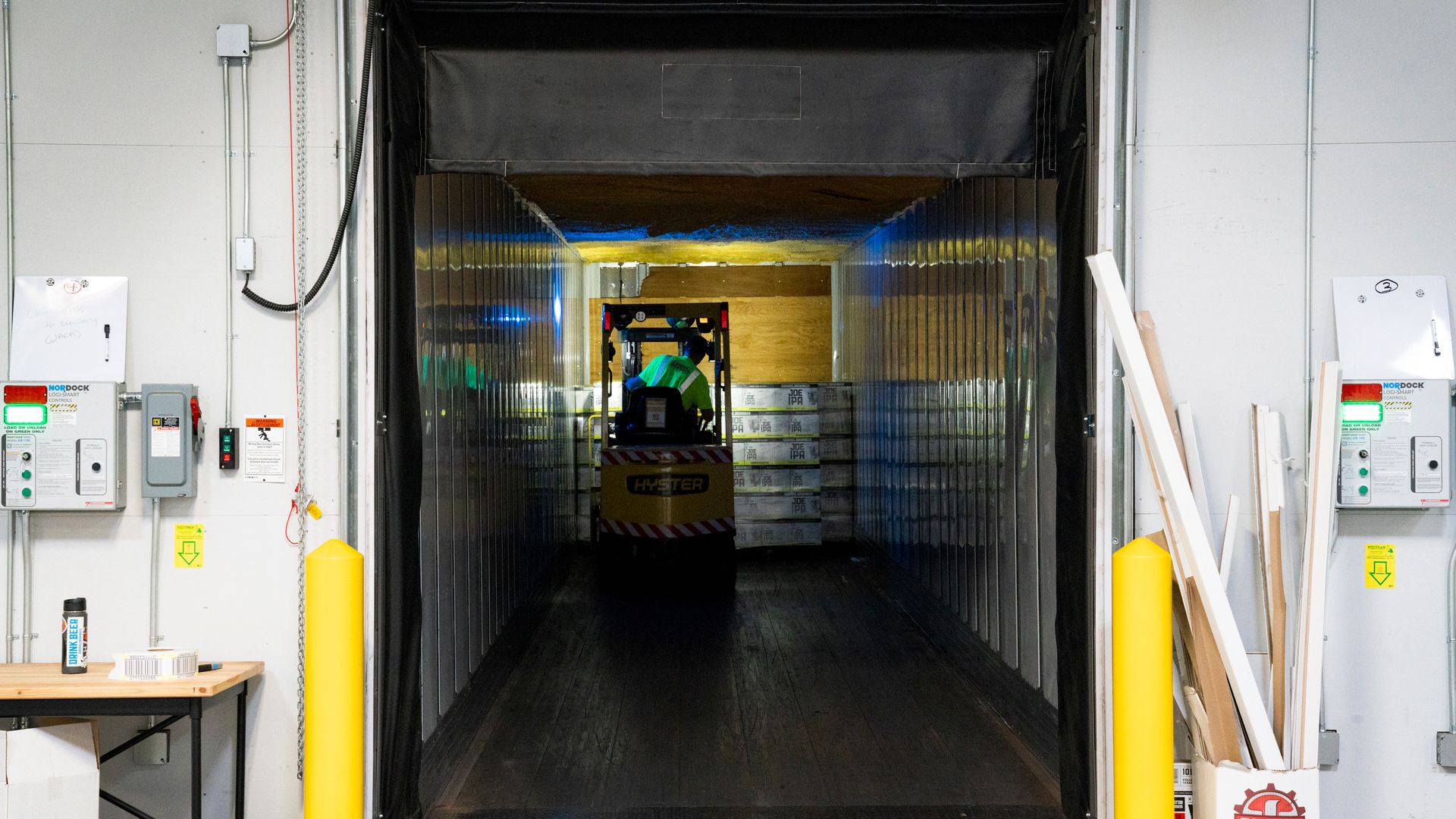
Short answer: receiving is the process of getting your inventory from a truck at the dock into a countable, sellable, pickable location in the warehouse — and it runs on an advance shipping notice, a scheduled dock appointment, a physical count against that notice, putaway to specific locations, and a documented resolution of anything that does not match. Get those five things right and the rest of fulfillment is straightforward. Get them wrong and every downstream number is suspect.
Receiving is also where most brand-3PL relationships develop their first real friction, and it is almost always because expectations were never written down.
What is an ASN and why does your 3PL keep asking for one?
An advance shipping notice (ASN) tells the receiving warehouse what is coming before it arrives: which SKUs, how many units, how they are packed, which carrier, and — where relevant — lot or serial numbers.
It sounds like paperwork. It is actually the thing that lets a warehouse plan. With a good ASN, the 3PL can allocate labor, reserve dock time, pre-stage locations, and receive against an expected list rather than reverse-engineering a count from a pile of cartons. Without one, your shipment becomes a discovery exercise, which is slower and more error-prone, and often triggers a manual handling surcharge.
What should an ASN contain?
- Purchase order number, referenced correctly and consistently
- SKU or GTIN for every item — matching the codes in the 3PL's system, not your internal shorthand
- Item-level quantities
- Packaging hierarchy: units per inner, inners per case, cases per pallet
- Carton and pallet counts, plus dimensions and weights
- Lot numbers and expiration dates where applicable
- Carrier, tracking or BOL reference, and expected arrival date
Common practice is to transmit the ASN roughly 24 to 72 hours ahead of arrival for domestic shipments — enough lead time to plan, recent enough to be accurate.
The mistake that causes most receiving problems
SKU mismatch. Your manufacturer labels cases one way, your ERP names the SKU another way, and the 3PL's system has a third variant. The warehouse cannot receive what it cannot identify, so the pallet sits. Agree on the SKU naming convention during onboarding and make your supplier label to it — see our 3PL onboarding guide and our post on SKU management.
Why do warehouses require dock appointments?
A dock door serves one truck at a time, and unloading crews are scheduled in advance. Appointment scheduling exists so that labor is available when your freight arrives rather than pulled off picking mid-shift.
What this means for you in practice:
- Book the appointment, and book it early. During peak season, dock slots fill days out.
- Late or unannounced arrivals get worked when there is capacity, which may be the next day. That is not punitive; it is physics.
- Detention charges are real. If a driver waits beyond the free window, someone pays.
- Container deliveries need more lead time than parcel or LTL, and often a live-unload versus drop-and-hook decision. See drayage from port to 3PL.
What happens during the physical receipt?
A competent receiving process runs in a consistent order:
- Check in and verify the paperwork against the BOL and the ASN.
- Inspect the trailer and the freight before unloading — crushed cartons, shifted pallets, water damage, broken seals. Damage noted at the dock is recoverable; damage found three days later usually is not.
- Unload and count. Against the ASN, at the level your agreement specifies — carton count, case count, or full unit-level piece count.
- Quality check per your spec: labeling, condition, expiration dates, any required inspection sampling.
- Putaway to system-directed locations, with each location scanned so the WMS knows exactly where the stock sits.
- Confirm the receipt, which is the moment inventory becomes sellable and syncs to your store and ERP.
That last step matters more than it sounds. Inventory in the building but not receipted is invisible to your storefront — a real cause of a stockout while the product is physically twenty feet from the pick face.
Carton count versus piece count
This is a cost and accuracy trade-off worth settling explicitly. Carton-level receiving is fast and cheap but trusts your supplier's case counts. Piece-level receiving catches supplier shortages at the door but takes materially longer and costs more. Most brands use carton counts for trusted suppliers and piece counts for new suppliers, high-value goods, or any supplier with a history of shorting. Put the rule in writing.
How are receiving discrepancies handled?
Discrepancies are normal. What separates a good 3PL from a frustrating one is whether they are documented and resolved or quietly absorbed.
The usual categories:
- Short shipment — fewer units than the ASN declared. Usually a supplier issue; the receipt should reflect what actually arrived, not what was promised.
- Over shipment — more than expected. Needs a decision: receive it, quarantine it, or return it.
- Damaged on arrival — must be noted on the delivery receipt before the driver leaves, or your freight claim is likely dead.
- Wrong SKU — quarantined pending your instruction.
- Unlabeled or mislabeled — usually triggers a rework charge, since someone has to relabel by hand.
Ask your 3PL three questions: how quickly are discrepancies reported, through what channel, and what happens to the goods while you decide. Answers of "within one business day," "a ticket in the portal with photos," and "quarantined, not received" are what you want.
What does receiving cost?
Receiving is usually billed by the hour, by the pallet, or by the carton, sometimes with a minimum. Rework — relabeling, re-palletizing, unpacking floor-loaded containers — is typically billed separately, and it is the line item most likely to surprise you. The cheapest way to control it is upstream: label correctly, palletize to spec, and send an accurate ASN. Our 3PL pricing guide covers how these line items fit together, and 3PL storage fees covers what happens once the goods are put away.
Frequently asked questions
How long does 3PL receiving take?
It depends on volume, palletization, and count level, but a common service standard is one to three business days from arrival to sellable, with faster turns available at a premium. Floor-loaded containers and unlabeled goods take substantially longer. Ask for the standard in writing, and ask what happens to it during peak.
What is the difference between receiving and putaway?
Receiving is verifying and accepting what arrived. Putaway is moving it into its storage location and recording that location. Inventory is generally not sellable until putaway is confirmed.
Can I send inventory directly from my manufacturer to my 3PL?
Yes, and most brands do. The requirement is that your manufacturer ships to the 3PL's labeling, palletization, and ASN standards. Send them the receiving guide before the first production run, not after. See how to send inventory to a 3PL.
Who is liable if units go missing between the dock and the shelf?
That is contractual, and it is worth reading closely. Most agreements make the 3PL responsible for shrink after a confirmed receipt, while shortages identified at receiving are a supplier or carrier matter. The confirmed receipt is the dividing line, which is exactly why count level matters.
How does receiving accuracy affect my inventory numbers later?
Directly and permanently. Every count after receiving is measured against the receipt. If the opening number is wrong, cycle counts will keep surfacing a discrepancy that no one can explain. See reconciling store, ERP, and 3PL counts and cycle counting.
The operator's takeaway
Receiving is the least glamorous part of fulfillment and the one with the longest shadow. Send an accurate ASN, book the appointment, agree on count level and SKU naming before the first shipment, and insist that discrepancies arrive as documented tickets rather than as a mystery in next month's count. Almost every inventory accuracy problem you will ever have starts here.
If you want to see what a receiving standard looks like written down, ask the Atomix team.

.svg)
.svg)
.svg)