Drayage Explained: How Your Container Gets From the Port to Your 3PL (and What It Costs in 2026)
Short answer: drayage is the short truck move that takes your container from the port terminal to a warehouse, and in 2026 most U.S. port drayage runs between $250 and $800 per container for moves within 50 miles. Base rates for a local 40-foot move average roughly $300 to $500, but all-in cost typically lands at $475 to $850 once fuel, chassis, and port fees are added. If you import, drayage is the leg where the most preventable money leaks, mostly through demurrage and per diem that a single scheduling mistake can trigger.
What is drayage?
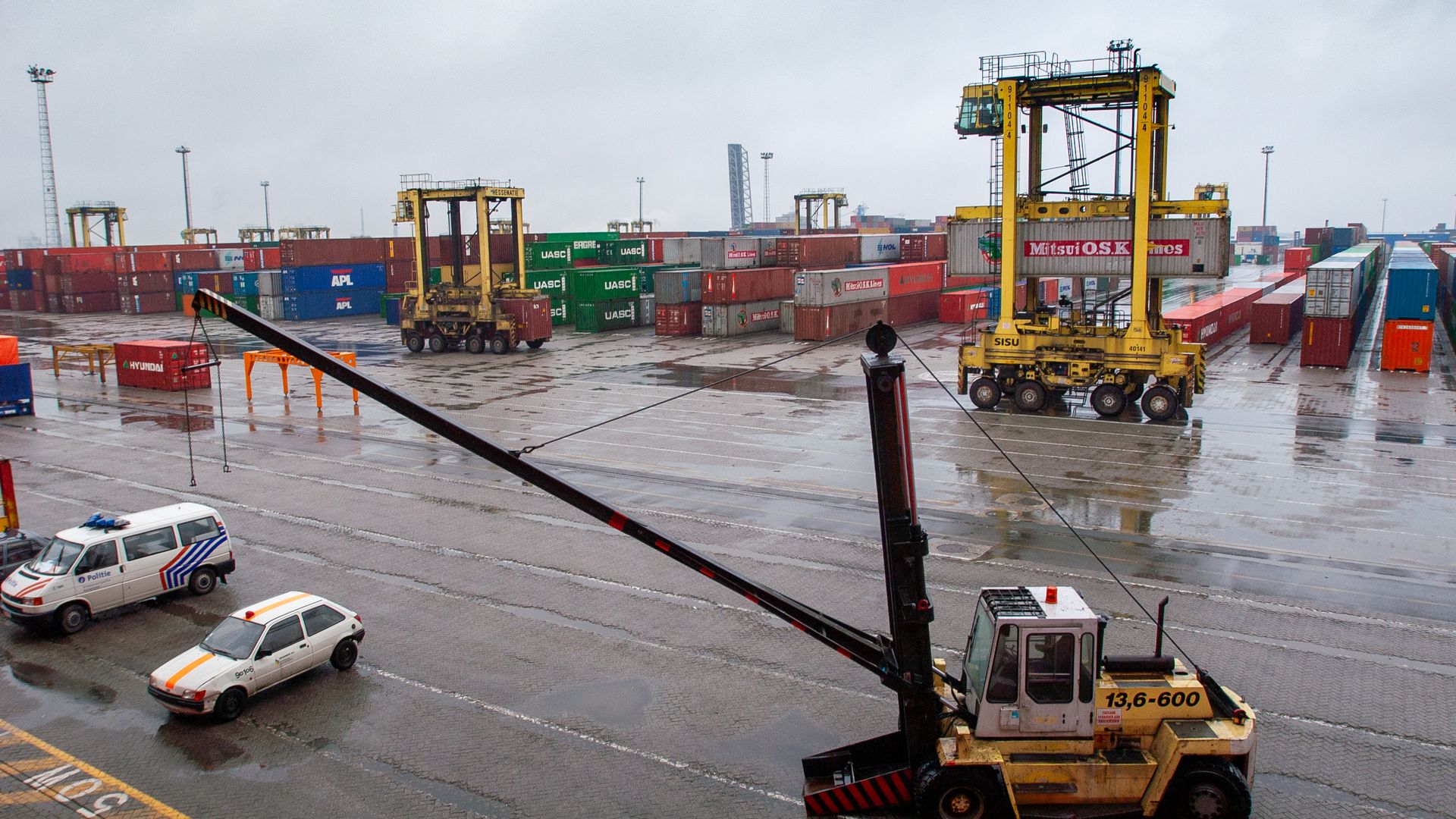
Drayage is the short-distance trucking of an ocean container between a port or rail terminal and a nearby facility. It is not long-haul freight and it is not local delivery. It is the specific, licensed, port-access move that gets your goods off terminal property and onto a dock where they can be unloaded.
Why does drayage have its own name and its own price sheet?
Because port access is its own world. Drayage carriers need terminal credentials, appointment access, chassis supply, and an understanding of each terminal's free-time clock. Those constraints, not the mileage, are what you are paying for.
What does drayage cost in 2026?
Ranges vary by port and distance. Published 2026 figures:
- National averages: roughly $150 to $300 for a 20-foot container, $250 to $500 for a 40-foot.
- Short hops under 25 miles: roughly $250 to $450.
- Moves within 50 miles: most fall between $250 and $800 per container.
- Local 40-foot all-in: typically $475 to $850 after fuel, chassis, and port fees.
- By port: $395 to $1,295 depending on port and inland distance. Savannah and Charleston sit at the low end, roughly $395 to $595. LA and Long Beach run 20% to 35% above the national average. Savannah and Houston are generally the lowest-cost major ports.
Which surcharges are legitimate?
- Fuel surcharge. Real, and large. In 2026 it typically adds 35% to 55% on top of the line haul.
- Chassis fee. Real. Roughly $35 to $50 per day, billed separately from the dray rate.
- Congestion, pre-pull, and yard storage. Situational. Ask what triggers each.
- Demurrage and per diem. Avoidable penalties, and the expensive ones: $150 to $350 per day per container.
What is the difference between demurrage and per diem?
They sound interchangeable and are not, which is why brands get surprised twice.
- Demurrage is charged by the terminal when your container sits on terminal property past its free time.
- Per diem (also called detention) is charged by the ocean carrier when you keep their container and chassis past the allowed days after pickup.
Both clocks can run at once. The practical defense is boring and effective: know your last free day before the vessel arrives, have a receiving appointment booked, and confirm the warehouse can devan on arrival rather than in three days.
Drayage vs transloading vs live unload: which do you need?
Live unload
The truck brings the container to your 3PL dock and waits while it is unloaded, then returns the empty. Cheapest option when the warehouse can devan in a couple of hours. Requires the receiving appointment and labor to actually be ready.
Drop and pick
The driver drops the loaded container and leaves. The warehouse unloads on its own schedule and the carrier returns for the empty. Adds chassis days but removes driver wait fees. Usually the right call when your 3PL has yard space.
Transloading
Contents are transferred from the ocean container into domestic trailers at a facility near the port, then linehauled inland. This is the play when your warehouse is far from the port, because you return the ocean container and chassis quickly, stopping the per diem clock, and you can often consolidate three 40-foot containers into two 53-foot trailers.
Container unloading, or devanning
The physical act of emptying the container, whether floor-loaded or palletized. Floor-loaded containers take dramatically longer and cost more to unload, so if your supplier can palletize, that is usually money well spent.
How do you keep the port-to-warehouse leg from blowing up your landed cost?
- Pick a warehouse with a sane port relationship. Distance from port matters, but so does whether the facility can take a container on arrival.
- Send the ASN and receiving details early. Your 3PL cannot book a slot for a shipment it does not know about. Details in how to send inventory to a 3PL.
- Ask your supplier to palletize. Faster devan, less damage, fewer labor hours billed.
- Know your free time in writing for both terminal and carrier, per shipment.
- Decide live unload vs drop and pick before the vessel arrives, not on the day.
- Consider transloading if your node is far inland, or place inventory closer to the port. See distributed inventory.
- Reconcile the invoice. Fuel, chassis, and accessorials are where padding hides. Match every line to your rate confirmation.
Is drayage a freight forwarder's job or a 3PL's job?
It depends who you hired. A freight forwarder arranges the international move and often the drayage with it. A 3PL stores and fulfills, and a capable one will either book drayage for you or coordinate directly with your forwarder's drayman. The failure mode to avoid is assuming someone owns the leg when nobody does. Name the owner in writing before the container ships.
Atomix books inbound and outbound freight and receives containers at Milwaukee, WI (200,000 sq ft, temperature-controlled and ambient), Salt Lake City, UT (75,000 sq ft), and Baltimore, MD (50,000 sq ft), with Dallas and Atlanta announced. Dock-to-stock runs 48 hours or less on average for compliant shipments, which is the number that actually determines whether your inbound container turns into sellable inventory before the per diem clock bites. Port choice matters here too: if you route through Savannah or Charleston, drayage is cheaper than West Coast alternatives, which is part of the case for an Atlanta or Southeast node.
Frequently asked questions
How far can a drayage move go?
Typically under 50 miles, sometimes up to about 150 to 250 miles depending on the carrier and market. Past that you are into regional or long-haul trucking with a different rate structure.
How long does drayage take?
The truck move itself is usually a few hours. The variable is terminal appointment availability and container availability, which can add days. Plan around the appointment, not the drive time.
Is transloading cheaper than direct drayage?
Not per container, but often cheaper overall for long inland moves. You stop per diem sooner, you can consolidate into fewer domestic trailers, and you avoid paying chassis days across a multi-day linehaul.
What causes most demurrage charges?
Missing paperwork, no receiving appointment at the destination warehouse, and customs holds. All three are visible in advance if someone is tracking the shipment.
Should my 3PL handle drayage or should I book it myself?
Booking through the party that controls the receiving dock removes the most common failure, which is a container arriving when nobody can unload it. If you book it yourself, share the appointment with your warehouse the moment it is set.
Do I need to palletize before shipping the container?
Not required, but a floor-loaded 40-foot container can take several times longer to unload than a palletized one, and devanning labor is usually billed by the hour. If the freight math works, palletize.
Sources
- WarehousingCosts.com, Port Drayage Costs 2026
- Blackbridge Logistics, Drayage Cost Per Container 2026 and Drayage at Every US Port
- Platton, Drayage Costs by US Port 2026 Rate Bands
- Port City Logistics, 2026 Guide to Drayage Rates and Fees
- Atomix Logistics facility and service documentation, atomixlogistics.com/locations (retrieved 2026-08-26)

.svg)
.svg)
.svg)