B2B Fulfillment Services: What They Are, How They Work, and How They Differ From DTC
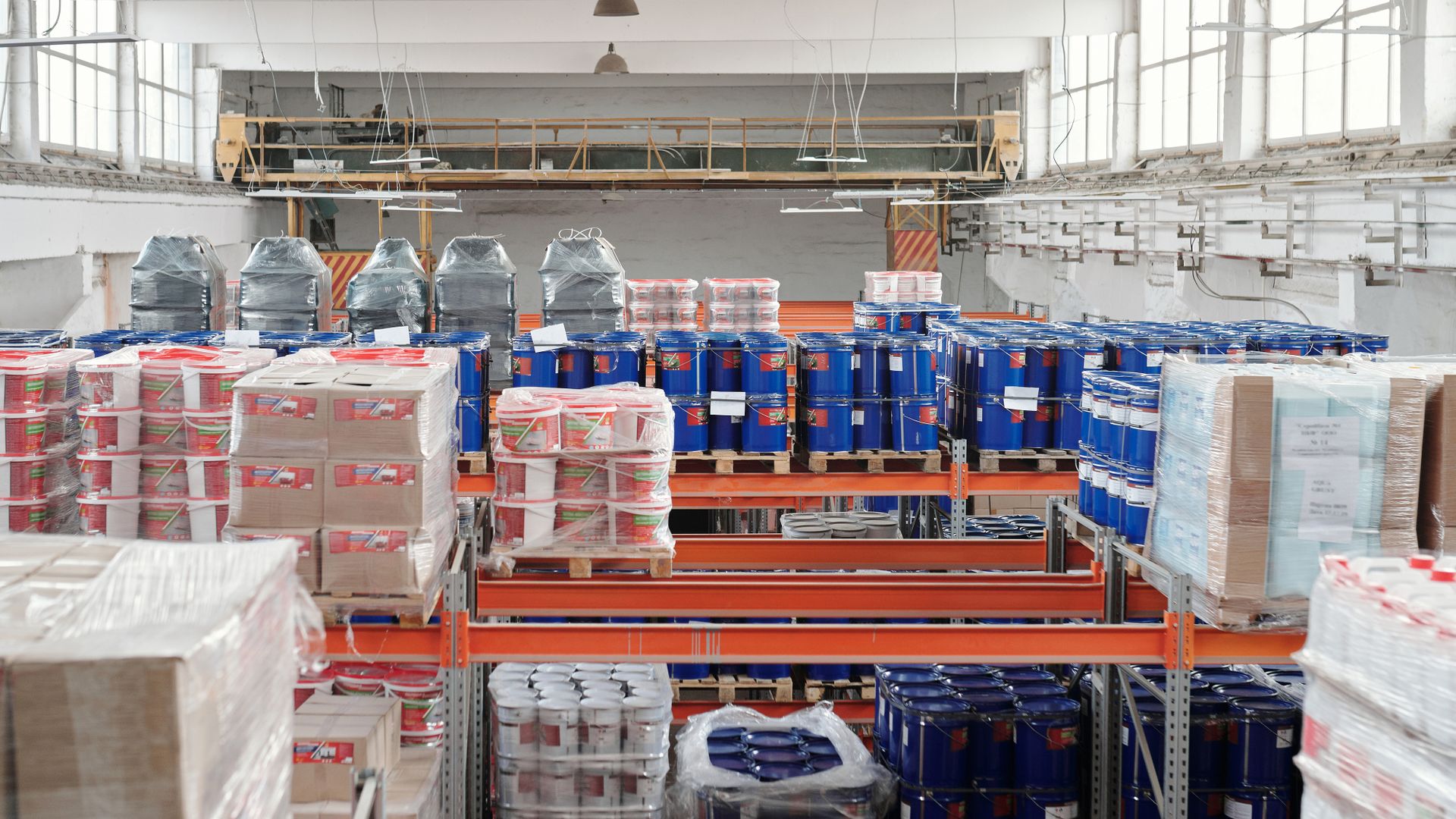
B2B fulfillment services are the receiving, bulk storage, case- and pallet-level picking, retail-compliant labeling, and freight shipping of orders that go to another business — a retailer's distribution center, a distributor, or a wholesale buyer — rather than to a consumer's doorstep. The difference that matters is not order size but governance: a DTC order is judged against your own service standard, while a B2B order is judged against the buyer's routing guide, and every deviation comes back as a chargeback deducted from the invoice you already shipped against.
Updated September 2026 — Atomix Logistics
US B2B ecommerce sales grew 13% to $2.93 trillion in 2025 even as total US B2B sales rose just 0.4%, according to Digital Commerce 360, January 2026 — wholesale and retail-account volume is moving into digital order flows, which is exactly the traffic B2B fulfillment handles.
What do B2B fulfillment services actually include?
A real B2B program covers six things a DTC operation rarely touches:
- Bulk storage and replenishment. Inventory held in pallet positions and case-flow lanes, not only in each-pick bins.
- Case, layer, and pallet picking. Orders built to the buyer's ti-hi — the cases-per-layer and layers-per-pallet spec published in the routing guide — then stretch-wrapped and placarded.
- Retail-compliant labeling. A GS1-128 carton label carrying an SSCC: the 18-digit Serial Shipping Container Code that uniquely identifies one logistics unit, built from an extension digit, your GS1 company prefix, a serial reference, and a check digit, per the GS1 SSCC standard.
- EDI transactions. Receiving the purchase order and returning a shipment notice machine-to-machine rather than by email.
- Freight coordination. LTL, full truckload, or the retailer's own collect carrier, plus a bill of lading and a delivery appointment booked into the DC's scheduling system.
- Compliance reporting. Visibility into which shipments were scored late, short, or mislabeled — before the deductions show up on a remittance.
How is B2B fulfillment different from DTC fulfillment?
DTC fulfillment ships single units to consumers on your terms. B2B fulfillment ships cases and pallets to a dock on the buyer's terms. The practical comparison:
| Dimension | DTC fulfillment | B2B fulfillment |
|---|---|---|
| Typical order | One to three eaches | Dozens of cases up to multiple pallets |
| Pick unit | Each | Case, layer, or full pallet |
| Who sets the rules | You do | The retailer's routing guide |
| Order intake | Cart or marketplace API | EDI 850 purchase order |
| Labeling | Carrier parcel label | GS1-128 carton label with an SSCC that matches the ASN |
| Transport | Parcel | LTL, FTL, or retailer-routed collect freight |
| Timing target | Ship fast; earlier is better | Must-arrive-by window; early deliveries can be refused |
| Cost of a mistake | A reship and a support ticket | A chargeback deducted from your invoice |
| Getting paid | Collected at checkout | Net terms, invoiced by EDI 810 |
Atomix Logistics runs both motions out of one inventory pool, so a wholesale PO and a consumer order draw from the same stock position instead of two siloed buckets. See how we structure B2B fulfillment for wholesale and retail accounts alongside DTC fulfillment for ecommerce brands.
What is a retail routing guide, and what happens if you miss it?
A routing guide is the retailer's binding rulebook for how a shipment must arrive: carton labels, pallet build, carrier selection, appointment scheduling, paperwork, and the delivery window. It is not advisory. Three current programs show what missing it costs.
- Walmart, On-Time In-Full (OTIF). Walmart expects prepaid suppliers to hit 90% on time and 95% in full, and collect suppliers to hit 98% collect-ready and 95% in full; a non-compliant line is charged 3% of the cost of goods for that line, with fines released quarterly — per Walmart's OTIF program as documented by 8th and Walton, 2026.
- Target, Perfect Order Program. Target launched the program for domestic suppliers in May 2025, adding ASN Availability, ASN Accuracy, and Physical Barcode Accuracy as scored categories, each fined at $0.75 per non-compliant carton with a $100 minimum, according to SupplyPike's SupplierWiki, 2025. One late, mislabeled shipment can trigger several of these on the same PO.
- Amazon, Vendor Central. Amazon tiers its ASN accuracy chargeback by compliance rate — 2% of product cost above a 95% accuracy rate, 4% between 70% and 95%, and 6% below 70% — per Amazon's Vendor Central chargeback schedule as documented by Flywheel Digital, 2026. Amazon has also given 30 days' notice before invoicing PO On-Time Accuracy chargebacks since April 30, 2024.
Read those three together and the pattern is clear: penalties are assessed on goods you already paid to make and ship, so a compliance miss is a straight margin deduction, not a lost sale. That is why B2B accuracy is an operations problem before it is a finance problem — see how Atomix Logistics approaches order accuracy and what we put behind it in our fulfillment guarantees.
What is EDI, and which documents does a B2B program need?
EDI (electronic data interchange) is the structured file format trading partners use to exchange business documents machine-to-machine; in US retail it follows the ANSI ASC X12 standard, first published in 1979. Four transaction sets carry most B2B fulfillment traffic:
- 850 — Purchase order. The retailer's order: items, quantities, unit pricing, ship-to DC, and the delivery window your clock runs against.
- 856 — Advance ship notice (ASN). A nested map of what is on the truck, down to which items sit in which carton on which pallet. The SSCC printed on each carton must match the SSCC inside the 856; that match is what lets the DC receive your pallet by scan instead of by hand.
- 810 — Invoice. The bill, sent after shipment and matched by the retailer against the 850 and the 856 before payment.
- 997 — Functional acknowledgment. A receipt confirming a document arrived and parsed. No 997 back means your ASN may never have landed, which is the quiet cause of a lot of ASN-availability chargebacks.
The practical question for a 3PL is not whether it has heard of EDI but whether its warehouse system generates a compliant 856 from the actual pick and pack event. Atomix Logistics handles this through its ecommerce and EDI integrations.
How much do B2B fulfillment services cost?
No honest provider quotes a single B2B rate, because the cost drivers differ from DTC. Expect line items for inbound receiving, storage priced by pallet position, a pick fee that changes sharply between each, case, and full-pallet picks, value-added labor priced per carton for labeling and relabeling, EDI setup plus per-document fees, and freight billed separately from fulfillment. Bring a real PO profile — cases per order, pallets per shipment, retailers served — to any pricing conversation. You can review how Atomix Logistics structures order fulfillment pricing before you ask for a quote.
When does a brand need B2B fulfillment services?
The common triggers are concrete: you land your first retail account and receive a routing guide; you launch a wholesale channel or a Faire storefront; a distributor asks for pallet-level shipments; or your B2B orders start jamming a pick line designed for singles. A fifty-case order that walks through a DTC line consumes the labor of hundreds of consumer orders and still risks a labeling miss. Once wholesale is more than an occasional exception, it needs its own workflow.
What should you look for in a 3PL for B2B fulfillment?
Plenty of 3PLs advertise B2B fulfillment. Pressure-test five capabilities before signing:
- Live EDI connections, not a roadmap. Ask which retailers they trade with today and to see a sample 856 they generate.
- A named routing-guide track record. Which retailers do they ship into, and who owns keeping labeling, palletization, and appointment rules current when a guide is revised?
- Case and pallet infrastructure. Racking, forklifts, stretch-wrappers, dock doors, and LTL and truckload freight management — not a parcel-only building.
- One inventory pool across B2B and DTC. A single stock position feeding both channels, so a wholesale PO never strands your ecommerce availability.
- Chargeback visibility. Reporting that surfaces compliance failures and their causes while you can still dispute them.
If you are already outsourcing and your provider fails two or more of these, the fix is usually a move rather than a fight — here is what a 3PL transition actually involves.
Frequently asked questions
What are B2B fulfillment services?
B2B fulfillment services store, pick, pack, label, and ship bulk orders from a brand to another business — a retail distribution center, a distributor, or a wholesale buyer. The work is done at case and pallet level, moves by freight rather than parcel, and must follow the buying retailer's routing guide, labeling, and EDI requirements.
What is the difference between B2B and DTC fulfillment?
DTC fulfillment ships one to three units to a consumer by parcel, judged on speed. B2B fulfillment ships cases and pallets to a loading dock by freight, judged against the retailer's routing guide and delivery window. B2B also requires EDI documents, GS1-128 carton labels, scheduled appointments, and net-terms invoicing instead of payment at checkout.
Do B2B fulfillment providers need EDI?
For retail accounts, effectively yes. Most major retailers exchange purchase orders (EDI 850), advance ship notices (EDI 856), and invoices (EDI 810) electronically under the ANSI X12 standard, and will not onboard a supplier who cannot transact that way. A capable 3PL generates the 856 directly from the pick and pack event.
What are retail chargebacks in B2B fulfillment?
Chargebacks, sometimes called expense offsets, are fees a retailer deducts from your invoice when a shipment breaks its rules — late arrival, short quantity, a missing or inaccurate ASN, or an unscannable carton barcode. They are assessed on goods you already produced and shipped, so they come straight out of gross margin.
Can one 3PL handle both B2B and DTC fulfillment?
Yes, and running both from a single inventory pool is the advantage: one available-to-promise position across wholesale and ecommerce, no stranded stock, one set of reporting. The caveat is capability. Many DTC-native 3PLs cannot produce a compliant ASN or a retail-ready pallet, so verify rather than assume.
What is an ASN, and why does it matter for wholesale orders?
An ASN, or advance ship notice, is the EDI 856 document telling the retailer exactly what is on an inbound truck, carton by carton. Its SSCC values must match the GS1-128 labels on the physical cartons so the DC can receive by scan. A missing or mismatched ASN is one of the most commonly fined violations.
Atomix Logistics runs B2B and DTC fulfillment from one inventory pool, with EDI, retail-compliant labeling, and freight handled in-house. Reach out if you want your wholesale program pressure-tested against the five criteria above.