Moving Inventory Between 3PLs: How to Plan the Transfer Without Stockouts
Short answer: To move inventory between 3PLs without stockouts, ship it in waves rather than one truck: send your fastest sellers first, keep a buffer of each SKU at the old warehouse until the new one shows it as available to sell, and route orders to whichever site has stock in the meantime. Send an advance ship notice (ASN) and labeled cartons on standard pallets so receiving is quick and countable, book freight by pallet count, and reconcile the old 3PL's final inventory report against the new 3PL's receiving report, SKU by SKU, before the old contract ends.
This post covers the inventory move itself. For the full switching sequence, see how to switch 3PL providers, and for the budget, the real cost of switching 3PLs.
What should move first?
Sort your SKUs by units sold over the last 60 to 90 days and split them into waves:
| Wave | What goes | Why |
|---|---|---|
| Wave 1 | Top sellers that make up most of your orders | The new warehouse can start shipping most orders on go-live day |
| Wave 2 | Steady mid-velocity SKUs, plus packaging and inserts | Completes most orders without split shipments |
| Wave 3 | Long-tail and slow movers | Low risk if delayed; often cheaper to sell down than move |
Ship your packaging, inserts and kit components in the first or second wave. A warehouse with product but no mailers can't ship.
How much buffer should stay at the old 3PL?
Keep enough of each SKU at the old warehouse to cover sales from the day a wave leaves until the new warehouse shows it as sellable. A simple formula:
Buffer units = average daily units sold × (freight transit days + receiving days + safety days)
Worked example with stated assumptions: a SKU sells 40 units a day. Freight takes 3 business days. The new 3PL's receiving takes 2 business days (Atomix reports dock-to-stock averaging 48 hours and commits to 4 business days or less, per its pricing page). You add 3 safety days for a missed pickup or a held pallet.
40 × (3 + 2 + 3) = 320 units stay behind at the old 3PL when wave 1 ships. Everything above that moves. Once the new site shows the SKU as available, route orders there and let the old site sell through what it holds.
Run this for each wave-1 SKU. If a SKU doesn't have enough stock to split, consider timing that SKU's move to land right after a purchase order arrives at the new warehouse instead of moving it at all.
What paperwork does the new warehouse need?
- An ASN for every shipment, listing SKUs, quantities, lot or expiration dates, carton counts and pallet counts. The ASN is what the receiving team checks the truck against.
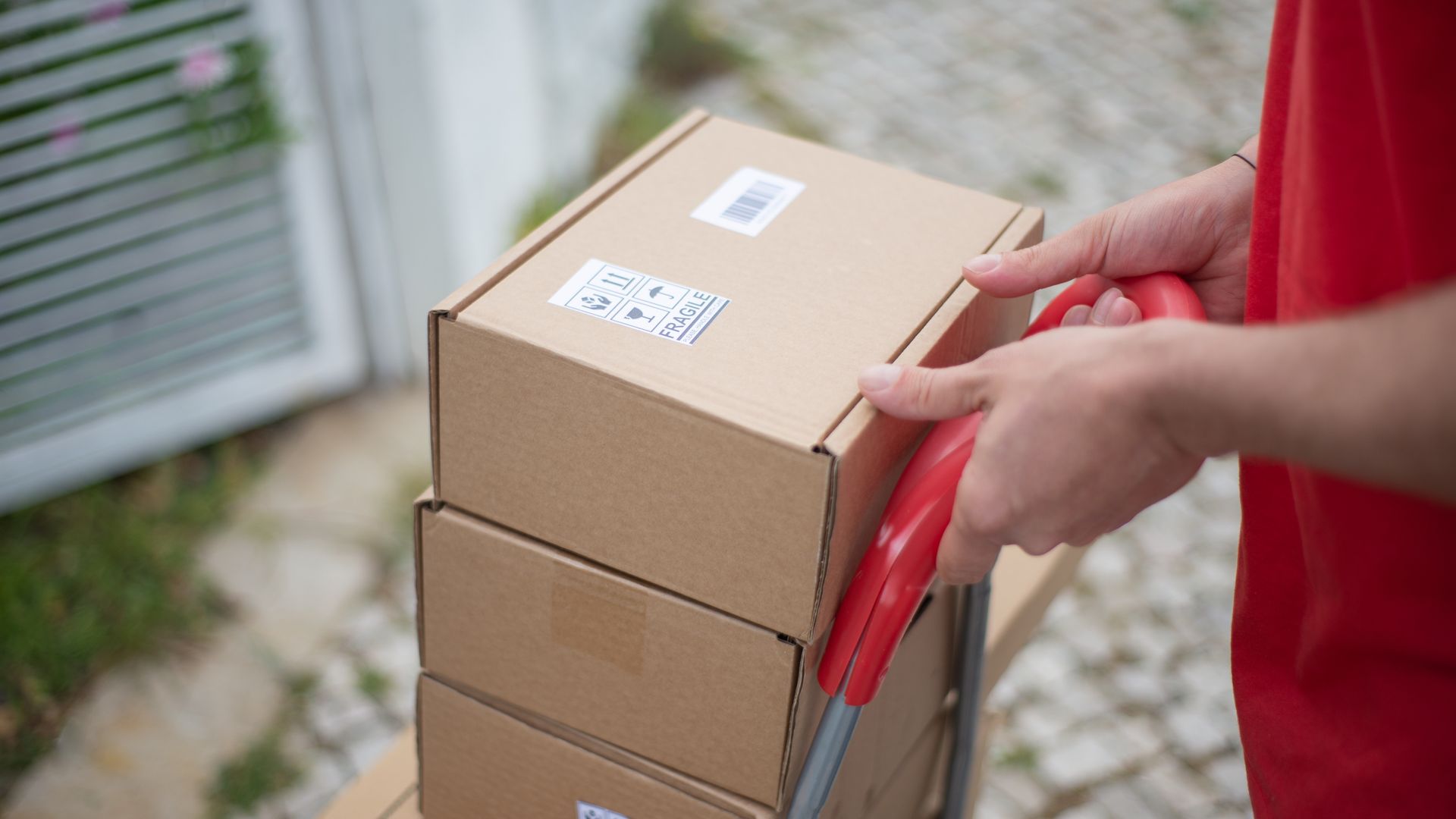
- Labeled cartons. Each carton should show the SKU, quantity and barcode on the outside. Unlabeled or mixed cartons slow receiving and are often billed at a higher rate.
- Single-SKU pallets where possible, wrapped, labeled on two sides, and not overhanging the pallet edge.
- A delivery appointment if the new 3PL requires one.
Ask the old 3PL to build pallets to these specs before pickup, and get their pull-and-load fee in writing. Atomix's pricing page notes that palletized, labeled inbound with a clean ASN sent ahead of the truck moves receiving cost down, while mixed-SKU cartons and unlabeled cases move it up. For more on what happens at the dock, see our guide to 3PL receiving.
How do you book the freight?
- Count pallets per wave, with dimensions and weight, from the old 3PL's pull list.
- Quote LTL for smaller waves and also ask for a truckload quote as you approach a full trailer. Past a certain pallet count, a dedicated truck can cost about the same and cuts handling.
- Confirm both docks. Pickup window at the old warehouse and delivery appointment at the new one, plus whether either needs a liftgate.
- Track it. Share the PRO or BOL number with both warehouses so receiving can plan labor.
How do you reconcile counts at both sites?
Count twice, then settle gaps before the old contract ends:
- Get the old 3PL's final inventory report by SKU, lot and location, including damaged and on-hold units.
- Get the new 3PL's receiving report for each wave.
- Compare them: units shipped per the old 3PL vs. units received, plus units still sitting at the old site.
- Investigate any gap by carton and pallet. Short pallets, over-shipped cartons and units sold during the move are the usual causes.
- Agree in writing who owns each variance before you pay the old 3PL's final invoice.
Weekly reconciliation during the overlap catches problems while both teams still have the paperwork.
How do you keep orders shipping during the move?
- Route by stock location. During the overlap, send each order to whichever warehouse has every item in it. Most order management setups can route by inventory availability.
- Hold back slow movers from the storefront only if a SKU will be in transit with no buffer left anywhere.
- Avoid peak. Carrier networks and receiving docks are busiest from mid-October to early January. See switching 3PLs during peak season for when a mid-peak move still makes sense.
To put dates on all of this, the free 3PL Switching Timeline Planner sizes the inventory transfer window from your pallet count and works backward from your contract end date.
Frequently asked questions
How long does it take to transfer inventory between 3PLs?
It depends on pallet count, distance and receiving speed. Atomix's Switching Timeline Planner estimates one to four weeks to move inventory for most brands, with freight and dock-to-stock time inside each wave.
Should I move all my inventory at once?
Usually not. One big transfer means every SKU is unsellable at the same time. Waves keep best sellers in stock somewhere throughout.
Who pays for moving inventory between 3PLs?
The brand typically pays the old 3PL's removal fees, the freight and the new 3PL's receiving. Some new 3PLs will credit onboarding or setup costs; ask before you sign.
What is an ASN?
An advance ship notice is a document sent ahead of a shipment that lists what is on the truck, so the receiving warehouse can check it in quickly and flag discrepancies.
Planning a move? Book a free strategy call and an Atomix onboarding specialist will map your waves with you.
Sources: Atomix pricing, receiving and dock-to-stock commitments; Atomix 3PL Switching Timeline Planner. Buffer example uses stated assumptions.