Rate Shopping Explained: How Your 3PL Picks a Carrier and Service Level for Every Order
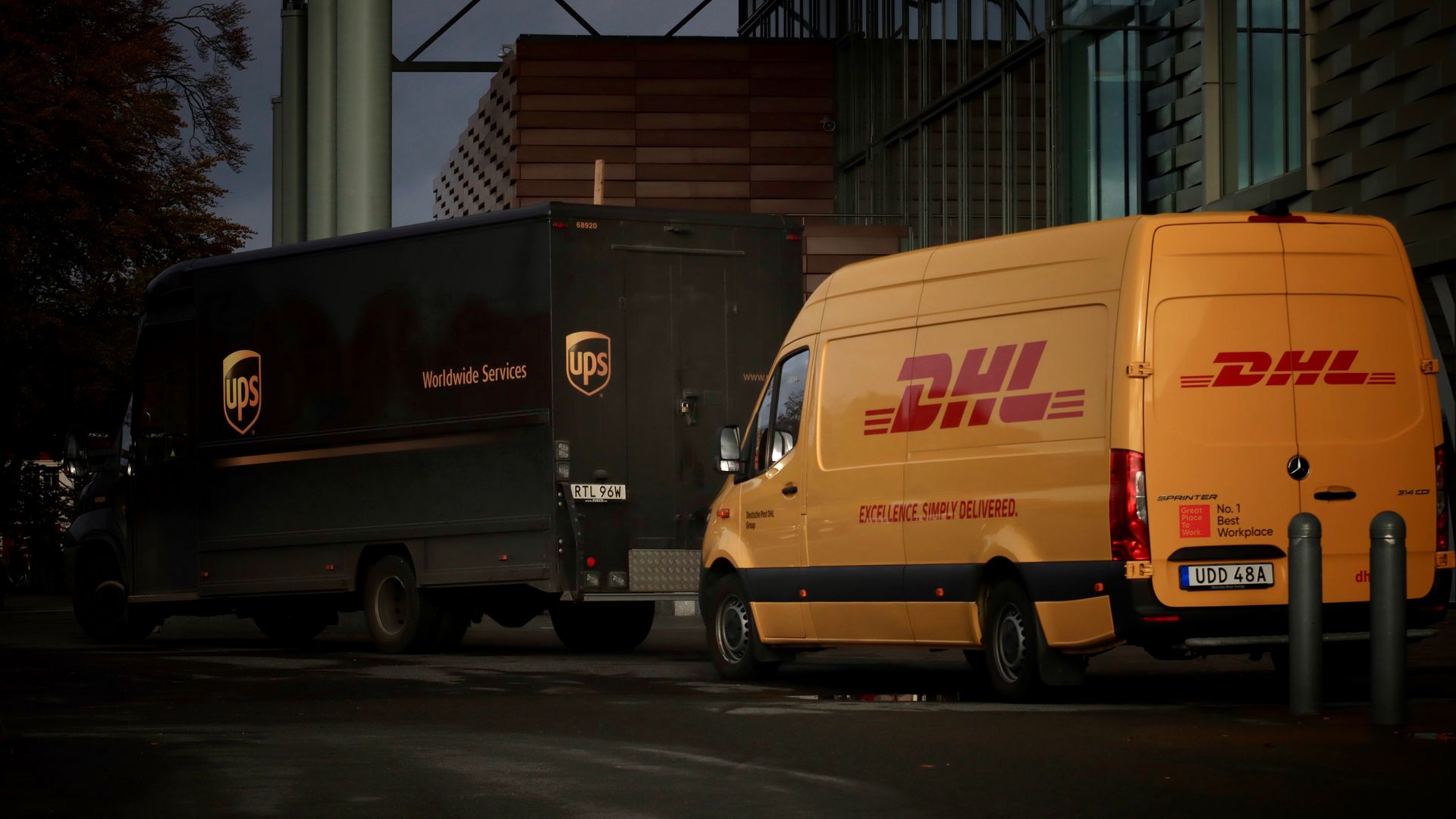
Short answer: Rate shopping is the step that happens in the half-second before a label prints. Your fulfillment software takes the order's real box dimensions, weight, origin warehouse and destination ZIP, asks every carrier account you have for a live rate and transit time, and selects the cheapest service that still meets the delivery promise you sold. Done well it typically trims a meaningful slice off outbound spend without changing a single thing the customer experiences. Done badly it saves forty cents and costs you a two-day promise.
What is rate shopping, exactly?
Rate shopping — sometimes called least-cost routing or multi-carrier rate comparison — is automated carrier selection at the order level rather than the account level. Instead of deciding "we ship everything UPS Ground," the system decides per order, because the cheapest carrier for a two-pound parcel going from Salt Lake City to Boise is frequently not the cheapest carrier for a nine-pound parcel going from Milwaukee to Miami.
It only works if three things are true: you have more than one carrier account available, the system knows the real packed dimensions, and someone has defined what "acceptable" means. Miss any one of those and rate shopping degrades into "always pick the lowest number," which is where the problems start.
What inputs actually drive the decision?
- Billable weight. The greater of actual weight and dimensional weight. This is why box selection and cartonization matter more than carrier negotiation for a lot of small-parcel brands.
- Origin and destination zone. Distance is priced in zones, not miles. Our explainer on shipping zones covers how the bands work, and the UPS ground map shows how quickly they escalate.
- Service level required. Derived from what the customer picked at checkout and what you promised on the product page — not from what is cheapest.
- Surcharges and accessorials. Residential delivery, delivery area surcharge, extended delivery area, additional handling, fuel. A rate comparison that ignores accessorials is not a rate comparison.
- Carrier cutoffs and transit calendars. A carrier that is one dollar cheaper but has already had its final pickup is not cheaper; it is a day late.
How does the selection logic usually work?
A practical rules hierarchy looks like this:
- Hard constraints first. Hazmat restrictions, PO boxes and APO/FPO addresses, oversize limits, signature requirements, and any customer-selected expedited service. These eliminate carriers outright.
- Delivery promise second. Filter to services whose committed transit time meets the promise date for that destination.
- Cost third. Among the services that survive steps one and two, pick the lowest fully-loaded rate including accessorials.
- Tie-breakers last. Carrier performance in that lane, volume commitments you need to hit, and damage history.
The order matters. Putting cost first and delivery promise second is the most common configuration mistake, and it is invisible until customers start complaining.
Where does rate shopping actually save money?
The savings concentrate in a few predictable places. Lightweight parcels under one pound where postal-injection services beat ground. Long-zone shipments where a regional carrier or a different national carrier has a rate advantage in specific lanes. Residential deliveries where surcharge structures differ meaningfully between carriers. And orders shipping from a second warehouse that happens to sit closer to the customer — which is less about rate shopping and more about network design and zone skipping.
For a head-to-head on the carriers themselves, see our comparisons of UPS versus USPS and the major ecommerce carriers.
Where does it go wrong?
Stale or estimated dimensions
If your SKU master says a product ships in a 10x8x4 box and operations actually uses a 12x10x6, every rate comparison is run on fiction. Rate shopping is only as good as your cartonization data.
Optimizing the wrong number
Choosing a service that is $0.35 cheaper but one transit day slower on a two-day promise converts a shipping saving into a support ticket, a possible refund, and a customer who does not reorder. Set a minimum savings threshold — many operators use a dollar figure or a percentage — below which the system keeps the faster service.
Ignoring the 2026 surcharge changes
UPS and FedEx both took a 5.9% average general rate increase for 2026 and revised the dimensional and cubic-volume triggers for Additional Handling and Large Package surcharges. Rules written against the old thresholds will now route some parcels into surcharge brackets your logic does not know about. Anyone rate shopping should re-validate their box profiles against the current thresholds.
Single-carrier volume commitments
If your discount tier depends on hitting a volume commitment with one carrier, aggressive diversification can cost you more in lost discount than it saves in per-parcel rates. Model it before you switch it on.
Do you need multi-carrier shipping software to do this?
You need a system that holds multiple live carrier accounts and can evaluate them at label time. That can be standalone multi-carrier shipping software, or it can be built into your 3PL's platform. If you work with a fulfillment partner, ask three questions: which carrier accounts do you rate-shop across, whose negotiated rates are being compared — yours or the 3PL's — and can I see the selection logic? A partner who cannot show you the rules is not rate shopping on your behalf; they are picking a default.
Atomix rate shops across carrier accounts at label creation from whichever facility holds the order — Milwaukee, Salt Lake City or Baltimore — with the delivery promise as a hard filter ahead of cost. If you want to understand how the rate you are billed relates to the rate that was shopped, our guide to reading a 3PL rate card is the companion piece.
Frequently asked questions
Is rate shopping the same as least-cost routing?
Effectively yes. "Least-cost routing" emphasizes the cost objective; "rate shopping" emphasizes the live comparison. Both describe automated per-order carrier and service selection.
Does rate shopping slow down fulfillment?
No. The rate call happens in milliseconds during label generation and does not add a meaningful step to pick, pack and ship.
Will rate shopping hurt my delivery times?
Only if it is configured to optimize cost ahead of the delivery promise. Configured correctly, the promise is a hard filter and the system chooses the cheapest option that still meets it.
Can I rate shop with my own negotiated carrier rates?
Usually yes. Most fulfillment platforms support bringing your own carrier accounts, though some 3PLs can beat your rates with aggregated volume. Compare both before deciding.
How much does rate shopping typically save?
It varies far too much by weight profile, zone mix and current carrier contract to quote a single figure honestly. The reliable way to find out is to rate shop a month of historical orders against your actual rates and measure the delta on your own data.
Want to see what your outbound spend looks like with the promise date as a hard constraint? Book a strategy session with Atomix.

.svg)
.svg)
.svg)