Seattle 3PL: How Pacific Northwest Brands Should Think About Fulfillment, Ports, and 2-Day Reach
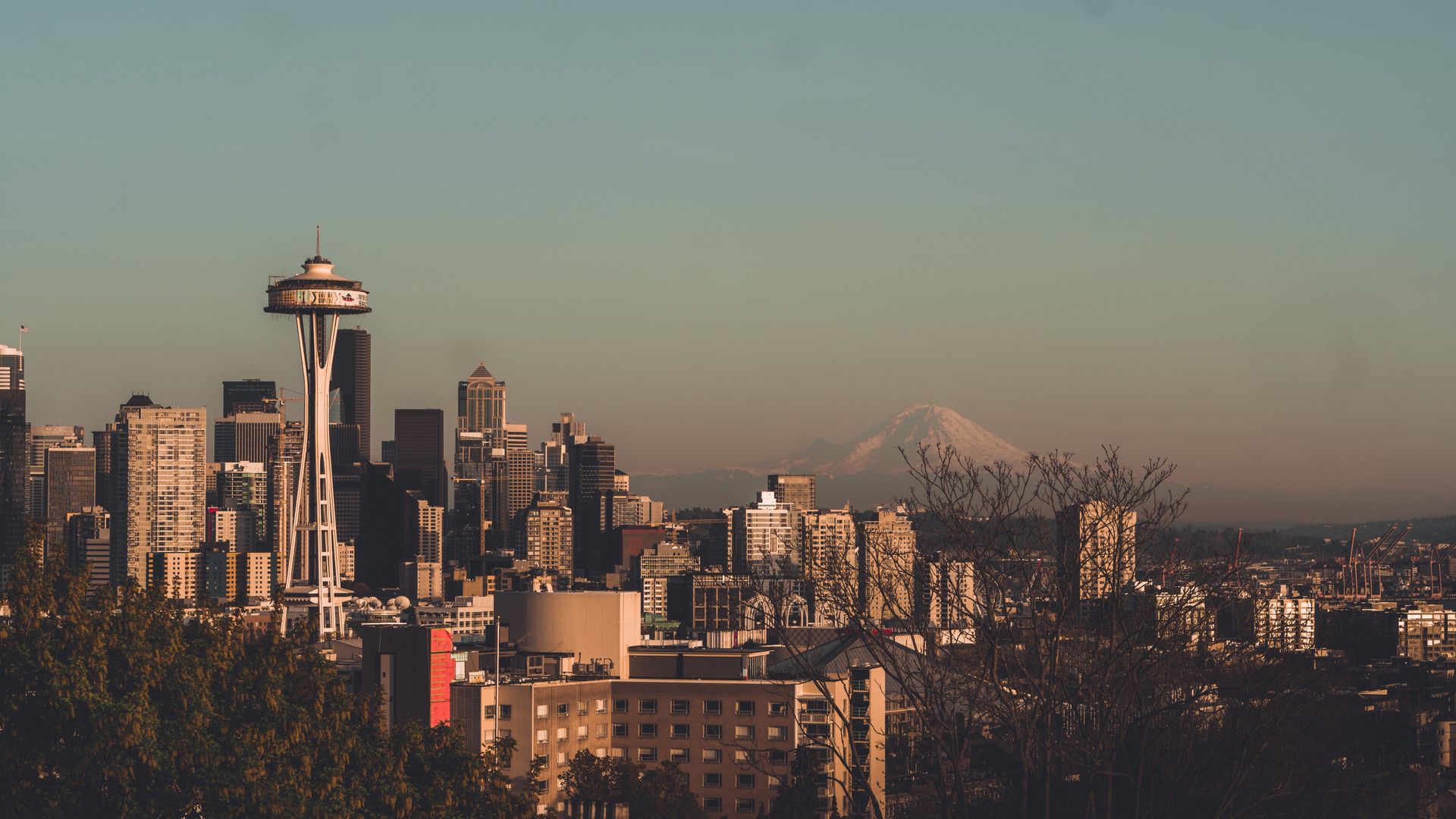
Short answer: A Seattle-area 3PL is the right call for two kinds of brand — one with a genuinely Pacific Northwest customer base, and one importing through the Northwest Seaport Alliance that wants to skip a cross-country drayage leg. For most DTC brands, a Seattle warehouse is a poor single-node choice: it sits in the far corner of the country, and the majority of U.S. households are four to five transit days away by ground. The honest comparison is not "Seattle versus nothing" — it is Seattle versus an inland Mountain West or Midwest hub.
Atomix does not operate a Seattle facility, so treat this as an argument rather than a pitch. Our West Coast node is in Salt Lake City, and below we explain exactly why, and when a Seattle 3PL beats it anyway.
What makes Seattle attractive for fulfillment?
Port access
The Northwest Seaport Alliance — the combined Seattle and Tacoma container gateway — is one of the major U.S. container complexes and is frequently the first North American call for transpacific services. For a brand importing from Asia, landing containers in Tacoma and transloading into a nearby warehouse removes a long, expensive drayage or intermodal leg. That is a real structural advantage, and it is an inbound-freight advantage, not an outbound-parcel one.
Regional density
Seattle, Tacoma, Bellevue, Everett and Portland form a genuinely dense corridor. If a disproportionate share of your orders ship to Washington, Oregon, Idaho and British Columbia, local fulfillment gives you next-day and two-day ground at low zones — and low zones are where parcel economics actually live. Our guide to shipping zones explains why a zone 2 shipment and a zone 8 shipment can differ by more than the cost of the product.
Talent and tech proximity
The Puget Sound region has deep logistics and supply-chain talent. For brands running complex operations that need hands-on collaboration, that matters.
What is the catch?
Geography. Seattle is roughly as far from the U.S. population center as a warehouse can be. Ground parcel from the Puget Sound to the Northeast and Southeast is typically four to five transit days, which means a single-node Seattle operation cannot offer a national two-day promise without paying for air — and paying for air on a DTC order usually erases the margin on that order.
Three secondary considerations:
- Industrial real estate cost. Puget Sound warehouse space prices at a premium relative to inland markets, which shows up in your storage rate.
- Geographic risk concentration. The Cascadia subduction zone and regional wildfire smoke events are real continuity considerations for a single-node operation in the region.
- Weather and mountain passes. Winter conditions in the Cascades occasionally affect inbound and outbound freight timing eastbound.
Seattle 3PL or an inland hub — how do you decide?
Run this test against your own order data rather than your intuition.
- Map your last 12 months of orders by state. Not your traffic, your orders.
- If more than about a third of orders ship to WA, OR, ID, MT, AK or BC, a Pacific Northwest node earns its keep on outbound alone.
- If your orders are nationally distributed, model a single inland node first. A Mountain West location reaches most of the West in two days and the Midwest in two to three, which is why our Salt Lake City facility exists; a Midwest hub like our Milwaukee operation reaches both coasts with reasonable balance and lowers inbound freight for domestically-manufactured goods.
- If you import heavily through Seattle/Tacoma and sell nationally, the usual answer is transload near the port and fulfill inland — get the port advantage without inheriting the outbound penalty.
- If you are already two-node, the higher-value second node for most brands is on the East Coast, not the Northwest. Our Baltimore facility exists for that reason: it covers the dense Mid-Atlantic and Northeast that a western node cannot reach cheaply.
What about Portland?
Portland is the other Pacific Northwest option and is worth evaluating alongside Seattle. Oregon has no statewide sales tax, industrial space has historically priced below Puget Sound, and Portland still covers the I-5 corridor well. It trades away direct proximity to the larger Seattle/Tacoma container complex. If you are shortlisting a Pacific Northwest 3PL, quote both.
What should you ask a Seattle 3PL before signing?
- What percentage of your outbound goes to zones 5 through 8, and what does that cost per order?
- Do you transload from the Northwest Seaport Alliance terminals, and what is your drayage cost per container?
- What is your dock-to-stock time for a compliant inbound?
- Do you rate shop across multiple carriers, or route by default?
- Can I add a second node later without re-onboarding from scratch?
Our 3PL selection guide and onboarding guide cover the rest of the diligence list.
Frequently asked questions
Is a Seattle 3PL good for national 2-day shipping?
Not on its own. A single Puget Sound node typically needs four to five ground transit days to reach the East Coast. National two-day coverage from the Northwest requires either air service or a second, more central node.
What is the best warehouse location for a Pacific Northwest brand selling nationally?
Usually an inland Mountain West or Midwest node, with a Pacific Northwest presence added only if regional order density or port transloading justifies it.
Does Seattle or Portland make more sense for fulfillment?
Seattle/Tacoma for port-driven import operations; Portland for cost-sensitive I-5 corridor coverage. Get quotes from both — the delta is often larger than brands expect.
Does Atomix have a Seattle warehouse?
No. Atomix operates Milwaukee, Salt Lake City and Baltimore, with Dallas and Atlanta announced. Salt Lake City is our West Coast node and reaches most of the western U.S. in two days.
How many warehouses does a DTC brand actually need?
Most brands are best served by one well-placed node until order volume and customer geography make the second node pay for itself in reduced zone costs. Two well-chosen nodes cover the large majority of the U.S. in two days.
Want a zone-by-zone read on where your orders actually go? Book a strategy session with Atomix and we will model it against your data.

.svg)
.svg)
.svg)