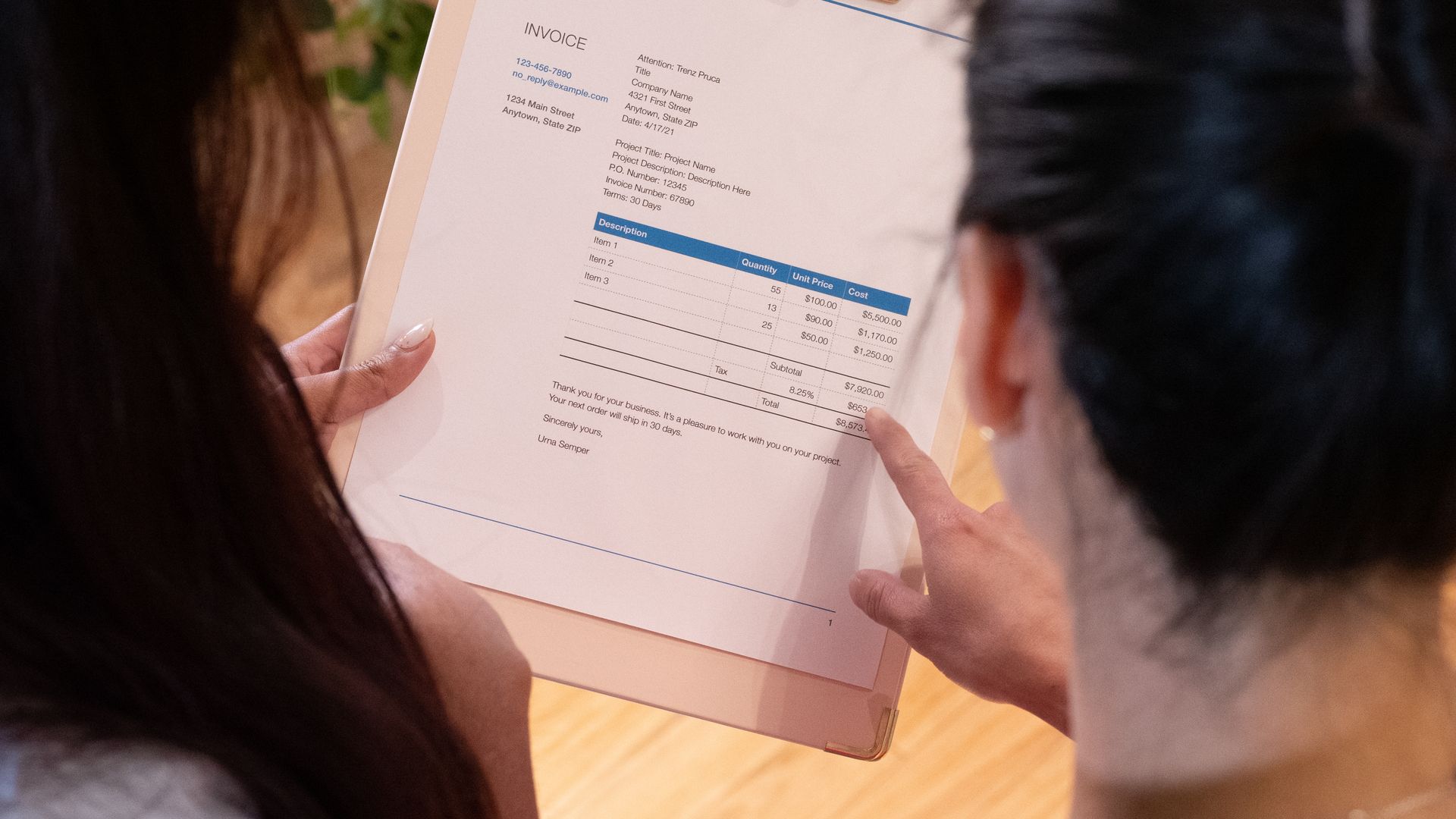
Questions to Ask a 3PL Before Signing: The 2026 Vetting Checklist

The questions that actually change the outcome are these five: what is my total modeled monthly invoice on my last 90 days of orders, what is your order-cutoff time and what happens when you miss it, how does inventory sync back to my store and how fast, how is cycle-count accuracy measured and reported, and what exactly does it cost and take to leave. Everything else on a 3PL sales call is texture; those five determine whether the relationship works at month nine.
Updated September 2026. This checklist is written from the Atomix Logistics onboarding side of the table — the questions we see brands wish they had asked, grouped by theme, each with why it matters and what a real answer sounds like.
Use it in evaluation calls and get the answers in writing. Anything a 3PL will not put in writing, assume you will not get.
Pricing and fees: questions to ask a 3PL about money
"Can you model my total monthly invoice using my last 90 days of order data?"
Why it matters: Unit rates are not a quote. Two providers with identical pick-and-pack fees — the charge for retrieving items from a bin and packing them into an outbound carton — can land 30% apart on the invoice once storage, receiving, packaging and accessorials stack up.
What a good answer sounds like: "Send us a 90-day order export and a SKU list with dimensions, and we will return a line-item invoice model within three business days, with the assumptions labeled." Compare modeled invoices, not rate cards, and sanity-check them against published order fulfillment pricing.
"What is your complete accessorial fee schedule, in writing?"
Why it matters: Accessorials are the per-event charges outside the core rates: kitting, insert placement, special packaging, returns processing, pallet handling, account setup, integration fees. They are where a cheap rate card recovers its margin.
What a good answer sounds like: A PDF or spreadsheet listing every chargeable event with a price, sent before you ask twice. "We will get you that" is a red flag, not an answer.
"How do storage rates and surcharges change during peak?"
Why it matters: A long-term storage surcharge is an extra per-cubic-foot charge applied to inventory that has sat past a defined age threshold. Marketplaces have made these steep: under Amazon's fee schedule effective January 16, 2026, the aged-inventory surcharge starts at $0.50 per cubic foot at 181–210 days and reaches $1.50 per cubic foot by 241–270 days, on top of regular monthly storage. Warehouses that copy that logic can turn slow SKUs into a standing bill.
What a good answer sounds like: A specific aging threshold, a specific surcharge, and a report that flags aging inventory before it crosses the line — not after.
"What carrier rates do I get, and do you pass through the general rate increase?"
Why it matters: Parcel is usually the largest line on a direct-to-consumer invoice, and it moves annually. UPS announced a 5.9% average general rate increase for 2026 effective December 22, 2025, and FedEx announced a 5.9% average increase effective January 5, 2026, according to Supply Chain Dive's 2026 reporting — both alongside surcharge hikes that push effective costs higher than the headline.
What a good answer sounds like: "Here are our negotiated rates by zone and weight band, here is our markup if any, and here is how we handle the annual GRI." Vague "we have great carrier rates" means they are keeping the spread.
"What are the monthly minimums, and what happens in a slow month?"
Why it matters: Minimums are how a 3PL protects revenue on seasonal brands. If your January is a quarter of your November, a minimum written to November volume is a penalty.
What a good answer sounds like: A stated minimum with a stated trigger, ideally one reviewed after 90 days of live volume rather than guessed at signing.
Operations and SLAs: questions to ask about actual performance
"What is your order cutoff time, and what is your same-day ship rate against it?"
Why it matters: A cutoff time is the daily deadline after which an order ships the next business day instead of today. A late cutoff is worth little if the ship-by rate against it is 92%.
What a good answer sounds like: Both numbers together — for example "2pm local cutoff, 99%+ shipped same day" — with last quarter's report attached. See how Atomix Logistics frames its fulfillment guarantees.
"What is in your SLA, and what is the remedy when you miss it?"
Why it matters: An SLA (service level agreement) is the contractual promise on speed and accuracy. Most 3PL SLAs are aspirational: they name a target with no consequence attached, which makes them marketing.
What a good answer sounds like: A named metric, a measurement method, a reporting cadence, and a remedy — fee credits, a root-cause report within a defined window, or an escalation path with names.
"What is your dock-to-stock time, and what is your ASN requirement?"
Why it matters: Receiving is the process of checking in inbound inventory and making it sellable; an ASN (advance ship notice) is the file you send ahead telling the warehouse what is arriving. Slow receiving is invisible on a sales call and brutal in practice — inventory you paid for that cannot be sold.
What a good answer sounds like: "24–48 hours dock-to-stock on ASN'd, properly labeled inbounds; here is the penalty schedule if your inbound arrives without an ASN." The second half is a sign of a disciplined operation, not a hostile one.
"Who owns my account, and what is the escalation path at 6pm on a Friday in November?"
Why it matters: Peak breaks the org chart. The difference between a named account manager and a shared inbox shows up exactly when it costs the most.
What a good answer sounds like: A named person, a response-time commitment for order-level issues, and a second name above them. Ask what that person's account load is.
Technology and integrations: questions to ask about the stack
"Is my platform a native integration or a middleware connector?"
Why it matters: "We integrate with Shopify" can mean a maintained native connection or a third-party bridge you end up paying for and debugging. The distinction surfaces at the worst moment.
What a good answer sounds like: A named list of supported platforms with build type and owner. Review the supported ecommerce and marketplace integrations before the call so you can ask about your exact stack.
"How fast does inventory sync back to my storefront, and what happens when the sync fails?"
Why it matters: Nightly sync means you oversell. The failure behavior matters as much as the frequency: some systems queue orders silently and you find out days later.
What a good answer sounds like: A stated interval (real-time or near-real-time for DTC), an alerting mechanism for failed syncs, and a named human who watches the queue.
"Can I see live inventory, orders and exceptions myself, without emailing you?"
Why it matters: Dependence on the account manager for basic data is a tax on your team and a hedge for theirs.
What a good answer sounds like: A live demo of the actual client portal during the call, with real data on screen. A slide deck of screenshots is not a demo.
Inventory and accuracy: questions to ask about what is on the shelf
"How do you run cycle counts, and what is your current inventory accuracy?"
Why it matters: A cycle count is a rolling partial count of inventory done continuously instead of one annual shutdown count. If a 3PL only counts annually, your system quantities drift all year and you discover it at year end.
What a good answer sounds like: A cadence (e.g. A-SKUs monthly), a stated accuracy percentage, the counting method, and a shrinkage policy that says who eats the variance.
"What is your order accuracy rate, and how is it calculated?"
Why it matters: Accuracy percentages are trivially inflated by choice of denominator — lines picked versus orders shipped versus customer-reported errors. Ask the formula before you compare numbers. Atomix Logistics publishes its approach on its order accuracy page.
What a good answer sounds like: A number, the formula behind it, and who pays to reship a mispick. If reships are billable to you, that is a pricing question disguised as an operations answer.
"How do you handle returns, and what does a return cost me?"
Why it matters: Returns are structural for DTC, not exceptional. The National Retail Federation's 2025 Retail Returns Landscape put the overall U.S. retail return rate at 15.8% and the online return rate at 19.3%, with total returns near $850 billion. A vague returns process is a real cost line.
What a good answer sounds like: A per-return fee, a disposition workflow (restock, refurbish, scrap), an inspection standard, and a turnaround time for getting sellable units back into available inventory.
Contract and exit: questions to ask before you sign
"What is the term, the notice period, and the auto-renewal language?"
Why it matters: Auto-renewal plus a long notice window is the most common way brands get trapped for an extra year after deciding to leave.
What a good answer sounds like: A short initial term, a notice period measured in weeks not quarters, and no evergreen renewal. If you want a shorter commitment, ask for it explicitly rather than assuming the default term is fixed.
"What is in your exit clause, and what will it cost me to remove my inventory?"
Why it matters: An exit or offboarding clause defines what happens to your goods, data and money when the relationship ends. Separately, under UCC Article 7 §7-209 — adopted in some form in all 50 states — a warehouse can hold a lien on stored goods for unpaid charges, so a billing dispute can become a physical inventory problem.
What a good answer sounds like: A written offboarding SLA: per-pallet outbound fees, a timeline, who palletizes and loads, what data you get back and in what format. If you are already mid-transition, the mechanics are laid out in this guide to switching 3PLs.
"What happens to my rates after year one?"
Why it matters: Many agreements allow unilateral annual adjustments with 30 days' notice, which makes the quoted rate a first-year promotion.
What a good answer sounds like: A cap, an index, or at minimum a defined notice period and a right to terminate without penalty if you reject the increase.
"Can I talk to two current clients my size — and one that left?"
Why it matters: Any 3PL can produce happy references. How they react to the churn half of the question is the highest-signal moment in the entire process.
What a good answer sounds like: Actual introductions, plus a straight account of why a client left. Published case studies are a starting point, not a substitute for a live call.
Pre-signing due diligence checklist
Ask for a document or a number, not a reassurance. This is the short list we would hand a brand evaluating any provider, including Atomix Logistics.
| Question | Document or number to request | Red flag |
|---|---|---|
| What will I actually pay? | Line-item invoice model built on your last 90 days of orders | Only a rate card; refusal to model |
| What else can I be charged? | Complete accessorial fee schedule, dated | "Standard industry fees" with no list |
| How fast do you ship? | Last quarter's same-day-ship report against stated cutoff | A target with no historical report |
| How accurate are you? | Order accuracy percentage plus the formula used | A round number with no denominator |
| How fast is receiving? | Dock-to-stock hours and the ASN requirement | "It depends on volume," full stop |
| Is my inventory count real? | Cycle count cadence, method and shrinkage policy | Annual physical count only |
| Will my store stay in sync? | Live portal demo on real data; sync interval; failure alerting | Screenshot deck instead of a demo |
| Can you handle peak? | Last Q4 peak daily order volume and accuracy at that volume | Capacity described only as "scalable" |
| What if you miss? | Written SLA with a named remedy and escalation contacts | SLA with targets but no consequence |
| How do I leave? | Exit clause: notice period, per-pallet outbound cost, data return | Auto-renewal plus a 90-day notice window |
| Is the facility real? | Site visit or live unedited video walkthrough | Reluctance to show the floor |
| Are you insured? | Certificate of insurance and stated liability limit per unit | Liability capped far below your COGS |
Frequently asked questions
How many 3PLs should I get quotes from?
Three to five is the practical range. Request a modeled invoice from every one of them using the same 90-day order export, then run deep-dive operational calls with the top two. Beyond five, the comparison stops being informative and starts being noise, and the modeling work on your side outweighs the marginal insight.
Should I visit the warehouse before signing a 3PL contract?
If your volume justifies the trip, yes. If it does not, ask for an unscripted live video walkthrough instead of a produced tour video. You are looking for labeled bins, a clear receiving dock, visible cycle-count activity, and floor staff who are not surprised that a customer is watching.
How long does 3PL onboarding usually take?
Two to four weeks is typical for a straightforward direct-to-consumer catalog with a standard platform integration; complex kitting, EDI or regulated products push it longer. Ask for the onboarding plan with named owners and dates attached to the agreement, not promised after signature.
What is the single biggest red flag in a 3PL sales process?
Refusal to model your total invoice or to hand over the complete accessorial fee schedule before signing. Pricing that is opaque during the sales process does not become transparent afterward. The second biggest is an SLA that states targets without stating a remedy when those targets are missed.
Should I sign a long-term 3PL contract to get better rates?
Only if the discount is specific and the exit terms are reasonable. A multi-year term with auto-renewal, a 90-day notice window and uncapped annual increases can cost more than the discount saves. Ask what the same rates look like on a shorter term before assuming length is required.
What documents should I have before signing with a 3PL?
At minimum: a modeled monthly invoice, the complete accessorial fee schedule, the written SLA with remedies, the last quarter's performance report, a certificate of insurance with stated liability limits, the onboarding plan with owners and dates, and the exit clause in full. If any one is missing, the contract is not ready to sign.
How do I compare 3PL quotes that are structured differently?
Normalize everything to one number: total cost per order at your real order profile, including storage, receiving, pick-and-pack, packaging, accessorials and parcel. Rate-card comparison across differently structured quotes is meaningless. For DTC brands specifically, run the model on both a peak month and a slow month.
Atomix Logistics answers every question on this list in writing during evaluation, including the exit clause and the full fee schedule. See DTC fulfillment services or read why brands choose Atomix.

.svg)
.svg)
.svg)