How to Audit Your 3PL Invoice: The Line Items That Quietly Inflate Your Fulfillment Bill
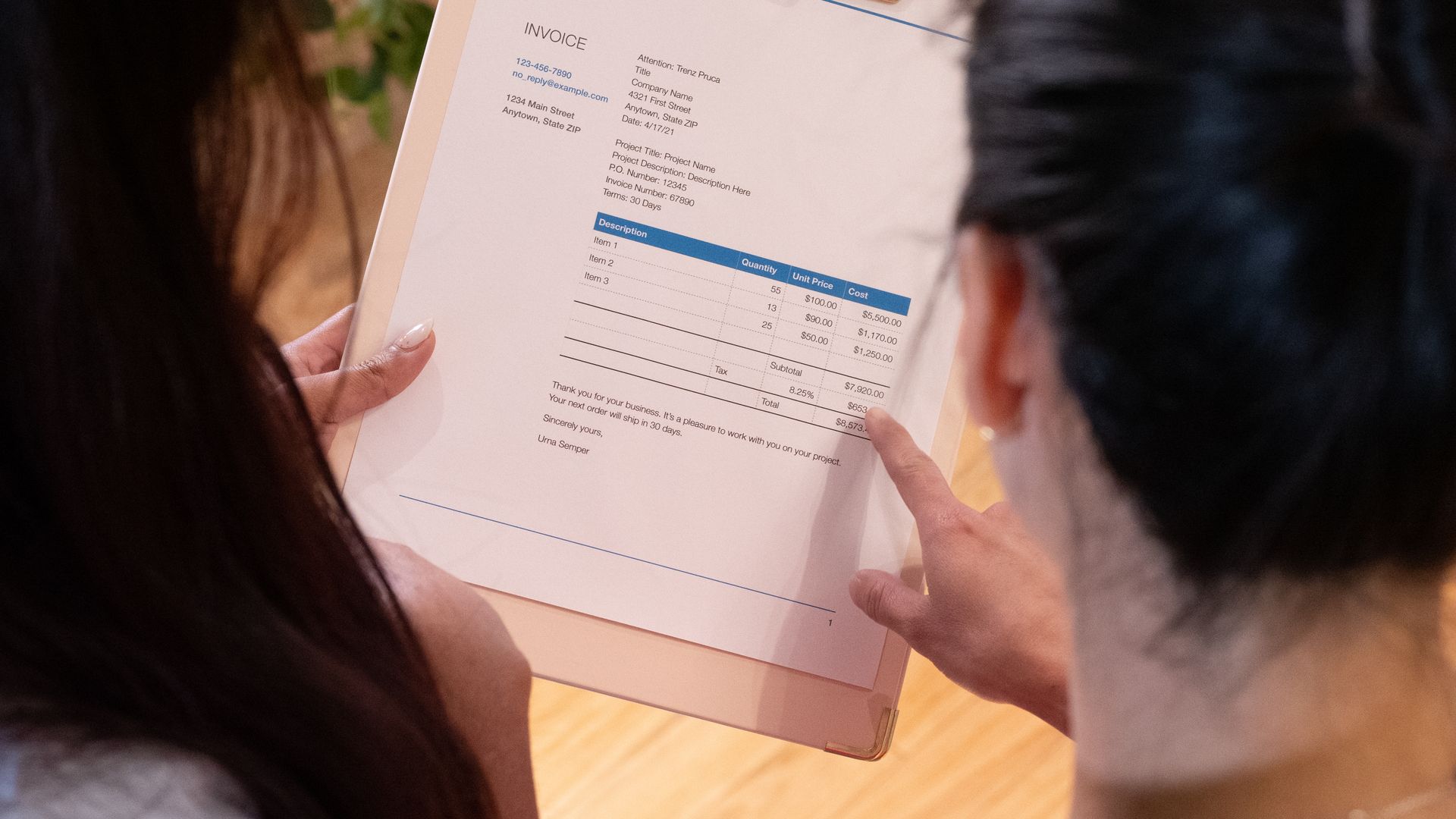
Short answer: Most 3PL overbilling does not come from the rates you negotiated. It comes from line items that sit outside the rate card — dimensional weight on outbound parcels, storage measured on a snapshot date that lands right after a big inbound, receiving billed per unit when you assumed per pallet, and per-order surcharges for work your team considers standard. Pull one full month of invoices, reconcile them against your contract line by line, and the gap almost always shows up in the same four places: outbound shipping, storage, receiving, and special projects.
If you have not yet compared quotes at the line-item level, start with our guide to comparing 3PL rate cards. This article is about what happens after you sign — when the real invoices arrive and stop matching the spreadsheet.
Why do 3PL invoices drift away from the quoted rate?
A fulfillment quote is a model. An invoice is a measurement. The two diverge because the quote was built on assumptions — average order size, average box dimensions, average units per inbound, a steady-state storage footprint — and your actual business does not hold still.
Three forces drive most of the drift:
- Carrier cost changes pass through. UPS and FedEx each announced a 5.9% average general rate increase for 2026, effective December 22, 2025 and January 5, 2026 respectively. But both also revised dimensional and cubic-volume criteria for Additional Handling and Large Package surcharges, which is why many shippers see an effective increase well above the headline number. If your 3PL bills shipping at cost-plus, that lands on your invoice whether or not anyone discussed it.
- Your product mix changes. A new bundle, a heavier secondary carton, a subscription SKU that ships in a mailer — each one moves you into a different fee bracket.
- Operational exceptions become routine. The first time a pallet arrives unlabeled it is a one-off. The twentieth time it is a recurring receiving surcharge nobody flagged.
Which line items are most likely to be wrong?
Outbound shipping and dimensional weight
This is the single largest line on most DTC invoices and the one brands check least. Two questions to answer: is your 3PL billing you their negotiated carrier rate, a marked-up rate, or a published rate? And is the billed weight the actual weight or the dimensional weight?
Dimensional weight is calculated from the box, not the product. A 12-ounce supplement jar in an oversized carton can bill as a four-pound parcel. Read how to calculate fulfillment and shipping costs and how shipping zones work before you accept a shipping line at face value.
Storage
Storage disputes are usually about when it was measured, not how much was stored. If your 3PL snapshots inventory on the first of the month and your Q4 inbound lands on the 28th, you pay peak-season storage for an entire month of product you held for three days. Ask whether billing is snapshot-based or daily-average, and whether partial pallets bill as full pallets. Our breakdown of pallet, shelf and bin storage pricing covers the differences.
Receiving and dock-to-stock
Receiving can be billed per pallet, per carton, per unit, or per labor hour — and the same inbound can cost three times as much depending on which applies. Non-compliant shipments (no ASN, mixed SKUs on a pallet, missing carton labels) usually trigger a per-unit rate instead of a per-pallet rate. That is a fair charge, but it should be visible and correctable, not permanent.
Pick fees and the definition of the first pick
Many rate cards quote a base pick fee that includes the first item and charges less for each additional item. Check what your 3PL counts as an item: a unit, a SKU line, or a kit. A two-unit order of the same SKU billing as two picks instead of one pick plus one additional is a small error that multiplies across every order you ship.
Special projects, kitting and rework
Inserts, gift wrap, bundling, relabeling and FBA prep are legitimate value-added services, but they should appear as discrete, quoted line items — not as an unexplained "project labor" block. Ask for the work order behind any labor charge.
Returns handling
Returns are often billed per return received, per unit inspected, and again for restocking or disposal. Make sure you are not paying an inspection fee on units that were immediately scrapped. See how reverse logistics works through a 3PL.
Account, platform and integration fees
Monthly account minimums, per-order technology fees, and integration maintenance charges are easy to forget because they do not scale with volume. They are also the easiest to negotiate away at renewal.
How do you actually run the audit?
- Pull a full, representative month. Not peak, not your slowest month. Get the invoice, the backup detail file, and your signed rate card side by side.
- Categorize every line. Sort into outbound shipping, storage, receiving, pick and pack, materials, value-added services, returns, and account fees. Anything that does not fit a category is your first question.
- Reconcile against the contract. For each category, confirm the billed rate matches the contracted rate and that the unit of measure matches too. Rate matches, unit of measure does not — that is the most common finding.
- Spot-check 20 orders end to end. Take twenty real orders and rebuild them from your rate card. Compare your total to the invoice total for those orders. A variance above two or three percent is worth escalating.
- Calculate cost per order and cost per unit. Track them monthly. A stable rate card with a rising cost per order means your mix, your box sizes, or your exception rate changed — and that is usually fixable on your side.
- Document and send one consolidated question list. One organized email with line references gets resolved faster than six separate complaints.
What should you do when you find an error?
Ask for a written correction and a credit, and ask what changed operationally so the same line does not recur next month. A good partner will answer both. If a 3PL cannot explain a line item in plain language, that is information about the partnership, not just the invoice.
At Atomix, billing accuracy is one of four written guarantees: invoices are accurate to the line item, and if we miss, you get a $25 credit per incorrect line item applied automatically — no claim forms, no argument. We publish it because invoice disputes are the quiet reason a lot of brands leave their 3PL, and it should not be your job to catch our mistakes.
How often should you audit?
Full line-by-line audit once a quarter. Cost-per-order and cost-per-unit tracked every month. A fresh audit any time you add a major SKU, change packaging, change carriers, or come out of peak season. If you are also weighing whether your current provider is the right fit, our guide to evaluating 3PL performance pairs well with this one.
Frequently asked questions
What is a 3PL invoice audit?
A structured reconciliation of a fulfillment invoice against the signed rate card and contract, line item by line item, to confirm the billed rates, units of measure and surcharges match what was agreed.
What are the most common hidden 3PL fees?
Dimensional weight on outbound parcels, snapshot-date storage billing, per-unit receiving on non-compliant inbounds, additional-pick definitions, unquoted project labor, duplicate returns-handling charges, and monthly account or technology minimums.
Can a 3PL change fees without telling me?
Carrier rate increases usually pass through automatically under a cost-plus shipping arrangement, which is contractual rather than hidden. Changes to the 3PL's own fees normally require notice under your agreement — check the notice clause and hold them to it.
How much variance is normal between a quote and an invoice?
A few percent from mix and carrier changes is ordinary. Consistent variance above roughly ten percent, or variance you cannot explain by category, points to a rate-card or unit-of-measure mismatch rather than normal drift.
Should I audit my own invoices or hire someone?
Most DTC brands under a few thousand orders per month can do this internally in a few hours per quarter using the steps above. Third-party parcel audit firms tend to pay for themselves only once outbound shipping spend is substantial.
Shipping enough volume that a two percent invoice variance is real money? Talk to the Atomix team about what a line-item-accurate invoice looks like.

.svg)
.svg)
.svg)