What Is a 3PL Platform? Definition, Features, and How It Differs From a WMS, OMS, or ERP
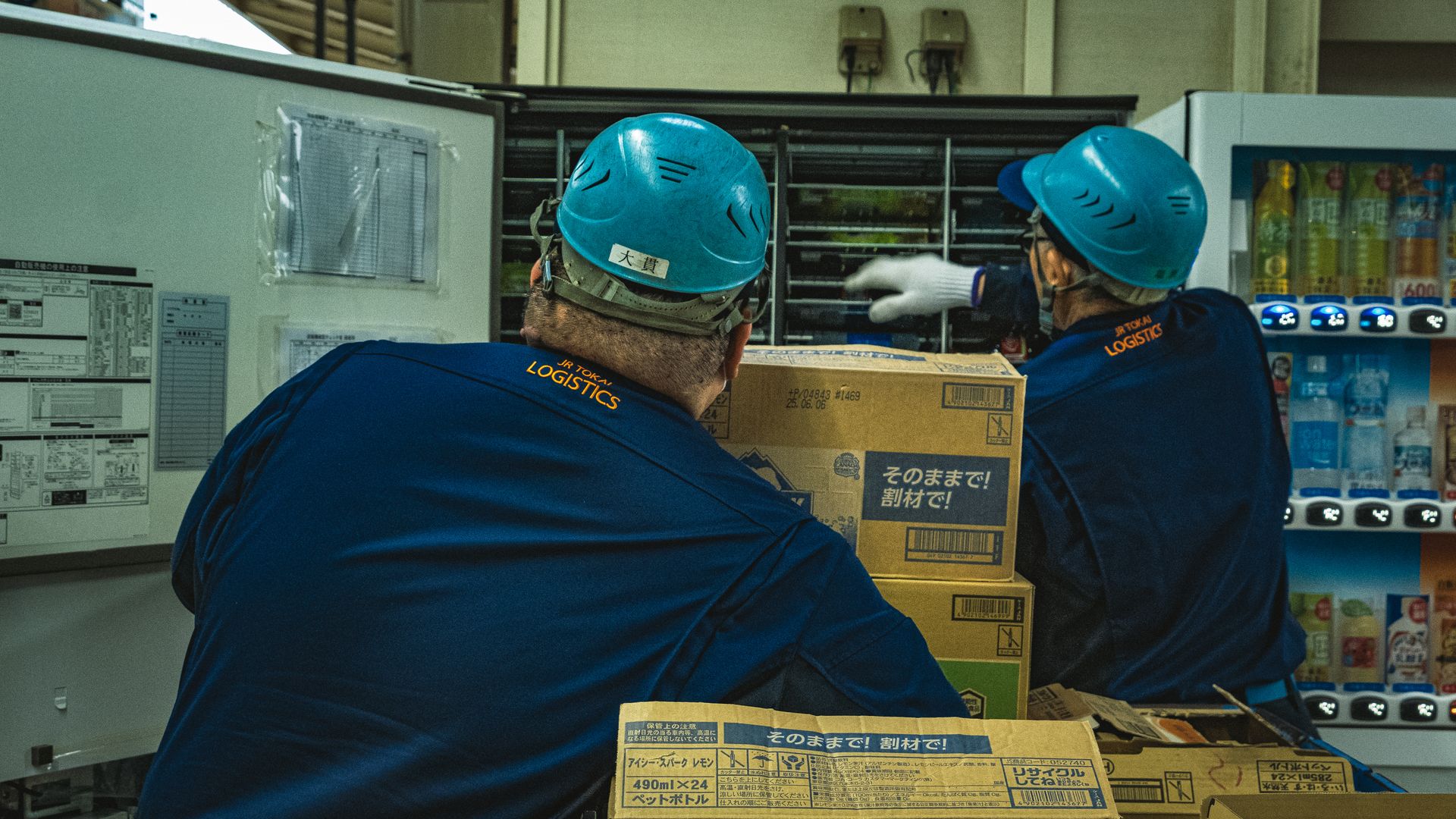
A 3PL platform is a third-party logistics provider's physical fulfillment operation — receiving, storage, pick and pack, and shipping — combined with the software layer you log into to run it. You get the warehouse labor and the technology in one contract, instead of licensing warehouse software and hiring a team to operate it yourself.
Updated September 2026.
What is a 3PL platform, exactly?
A 3PL platform is the client-facing software a third-party logistics provider wraps around its warehouse services: order intake from your sales channels, live inventory counts, shipment tracking, billing detail, and reporting. The distinguishing feature is that the software and the people executing the work are the same vendor. If the pick is wrong, the portal and the person who can fix it belong to one company.
That is also why the category is growing. According to Armstrong & Associates' Convergence: Trends in 3PL/Customer Relationships – 2026 report (April 2026), 94% of domestic Fortune 500 companies now work with at least one 3PL, up from 46% in 2001, and U.S. 3PL revenues were projected to reach $323.4 billion in 2025. Outsourcing is no longer the differentiator; the quality of the technology layer is.
What does a 3PL customer portal actually show you?
Generic descriptions of "visibility" are useless when you are evaluating providers. Here is what a working 3PL customer portal — the logged-in dashboard a brand uses to see and control its account — should display without you emailing anyone:
- Sellable vs. on-hand inventory by SKU. Not one number. On-hand includes units allocated to unshipped orders, damaged stock, and quarantined receipts. Sellable is what you can actually promise a customer today.
- Order status with a timestamped trail. Received, allocated, picked, packed, label printed, carrier scanned. When a customer emails about a missing package, the answer is which step it stalled at.
- Inbound receipts in progress. Container or pallet arrived, counted, discrepancies flagged, put away. Receiving is where most inventory drift starts.
- Exception queues. Orders on hold for address validation, missing SKU mapping, out-of-stock components in a bundle, or oversized dimensions. A platform that hides exceptions is hiding your problems.
- Itemized billing. Every line tied to a verifiable event — a receipt, an order number, a storage location, a specific carrier label.
Atomix Logistics exposes these in the Atomix client app, and publishes its fulfillment pricing so the invoice lines in the portal map to a rate card you agreed to in advance.
3PL platform vs. WMS vs. OMS vs. ERP: what is the difference?
These four get used interchangeably in sales calls, and they are not the same thing. Quick definitions first:
- WMS (warehouse management system): software that directs work inside a building — receiving, putaway, pick paths, packing, cycle counts.
- OMS (order management system): software that decides where an order should be fulfilled from and in what sequence, across multiple locations and channels.
- ERP (enterprise resource planning): the financial system of record — purchasing, cost of goods, accounting, and often demand planning.
- API integration: a direct software-to-software connection that lets two systems exchange orders, inventory, and tracking automatically instead of by file upload or email.
| System | Who owns it | Primary job | Who logs in daily |
|---|---|---|---|
| 3PL platform | Your 3PL | Connect your channels to the 3PL's warehouse work; show inventory, orders, exceptions, and billing | Brand ops lead, customer service, founder |
| WMS | Whoever runs the warehouse (your 3PL, or you if you self-fulfill) | Direct labor inside the four walls: receiving, putaway, picking, packing, counting | Warehouse associates and supervisors |
| OMS | You (or bundled into your ecommerce platform) | Route each order to the right fulfillment location and sequence it | Ops and merchandising teams |
| ERP | You | Financial system of record: purchasing, COGS, inventory valuation, accounting | Finance, purchasing, leadership |
The practical takeaway: a 3PL platform does not replace your ERP, and it should not be the only place your financial inventory number lives. It replaces the need for you to license and staff a WMS. Most brands under roughly $20 million in revenue never need a standalone OMS — their ecommerce platform plus the 3PL platform covers routing.
How does a 3PL platform actually sync with your store?
This is where "real-time inventory" claims deserve scrutiny. Sync happens through API integrations, and every channel imposes its own limits.
On Shopify, the Admin API allows 40 requests per app, per store, per minute, replenishing at two requests per second, per Shopify's developer documentation (2026). Shopify also publishes an inventory_levels/update webhook, so a well-built integration listens for changes rather than polling on a timer. On Amazon, the picture is slower: Amazon's Selling Partner API documentation notes that FBA fulfillment reports update in near real time with a typical delay of roughly one to three hours after an order ships, and in rare cases up to 24 hours.
So when a provider says "real-time," the honest version is: minutes for order and inventory events on modern APIs, hours for some marketplace reporting. Ask any provider two questions — how often does inventory push to each channel, and what happens when the push fails? The failure path matters more than the happy path.
What actually breaks in 3PL integrations
In practice, the recurring failure modes are mundane: a SKU renamed in Shopify that no longer matches the warehouse record, a bundle or kit whose components were never mapped, a new sales channel added without telling the 3PL, and API version deprecations that quietly stop a connection. A serious provider monitors for failed syncs and tells you before your customer does. Review which connections are native and which run through middleware on the Atomix integrations page before you assume a channel is covered.
Why does 3PL technology matter more as you scale?
At ten orders a day you can run fulfillment from a spreadsheet. At several hundred orders a day across three channels, the platform is the difference between knowing and guessing. Multi-channel inventory sync is what prevents overselling during a spike. Allocation rules are what stop a single wholesale purchase order from draining the stock reserved for DTC customers. And itemized billing is what lets you calculate true cost per order — the number that decides whether your free-shipping threshold and bundle pricing are actually profitable.
Accuracy compounds too. A mis-picked order costs the pick, the return shipping, the replacement, the support ticket, and often the customer. Atomix Logistics publishes its approach to order accuracy and backs performance with written service guarantees, which is the right thing to ask any provider for in writing rather than taking on trust.
How should you evaluate 3PL software before you sign?
Can you see the live portal, with real data?
Ask for a screen-share of an existing client account (anonymized), not a slide deck. Click through to a single order and trace it end to end. If the demo is static images, the portal is probably thinner than the pitch.
Who fixes an integration when it breaks?
Confirm which connections are native versus middleware, who owns monitoring, and what the response time is when a channel API changes. Ask how long a standard Shopify connection takes from contract to first live order.
Does the invoice reconcile to the portal?
Request a real, redacted invoice. Every line should map to an event you can verify in the portal. Surprise line items — "handling," "admin," "technology fee" — are where margin quietly disappears.
What happens to your data if you leave?
Ask whether you can export order history, inventory ledgers, and lot or expiration data, and in what format. Brands planning ahead should read through the mechanics of switching 3PLs before signing, not after.
How Atomix Logistics approaches the 3PL platform
Atomix Logistics pairs its software with a Micro-Pod fulfillment model: small, dedicated warehouse pods staffed by a consistent team that learns your products, packaging, and quirks. Orders sync from DTC, B2B, and marketplace channels; inventory and exceptions are visible in the client app; and because the same pod handles your account every day, the data in the platform reflects an operation you can actually talk to by name. Brands can see how this plays out for DTC fulfillment specifically, or review outcomes in the Atomix case studies.
Frequently asked questions about 3PL platforms
What is a 3PL platform in simple terms?
A 3PL platform is a third-party logistics provider's warehouse operation plus the software you log into to run it. You get receiving, storage, pick and pack, and shipping from the provider, and a customer portal with live inventory, order status, and billing. You buy the service and the technology in one contract.
Is a 3PL platform the same thing as a WMS?
No. A WMS is the internal software that directs warehouse labor — receiving, putaway, picking, packing. A 3PL platform includes a WMS but adds the parts you actually touch: store integrations, a customer portal, itemized invoices, and reporting. If you self-fulfill you license a WMS; with a 3PL, the WMS comes bundled.
Do I still need an ERP if my 3PL has a platform?
Usually yes, if you already have one. An ERP is your system of record for finance, purchasing, and accounting; a 3PL platform is the system of record for physical inventory and outbound orders. Most brands sync the two so cost of goods and stock valuation stay accurate, rather than replacing one with the other.
How fast does inventory sync between a 3PL platform and Shopify?
It depends on the channel, not just the 3PL. Shopify's Admin API allows 40 requests per app per store per minute, refilling at two per second, according to Shopify's developer documentation. Amazon's FBA reports update in roughly one to three hours per Amazon's SP-API docs. Treat real-time as minutes, not milliseconds.
What does a 3PL platform cost?
Platform access is normally bundled into fulfillment rates — receiving, storage, pick and pack, and shipping — rather than billed as separate software licensing. Before signing, confirm in writing whether portal seats, each store integration, EDI connections, custom reports, and API access carry setup or monthly fees. Ask for a sample invoice.
Can a 3PL platform handle both DTC and B2B orders?
A capable one can. Look for separate order rules per channel, inventory allocation that stops wholesale purchase orders from draining DTC stock, retail routing guide compliance, and EDI or vendor-portal support for ASNs and labels. Ask to see a real B2B order flow in the portal, not a slide.

.svg)
.svg)
.svg)