3PL for Ecommerce: How It Works, What It Costs, and When You Need One (2026)
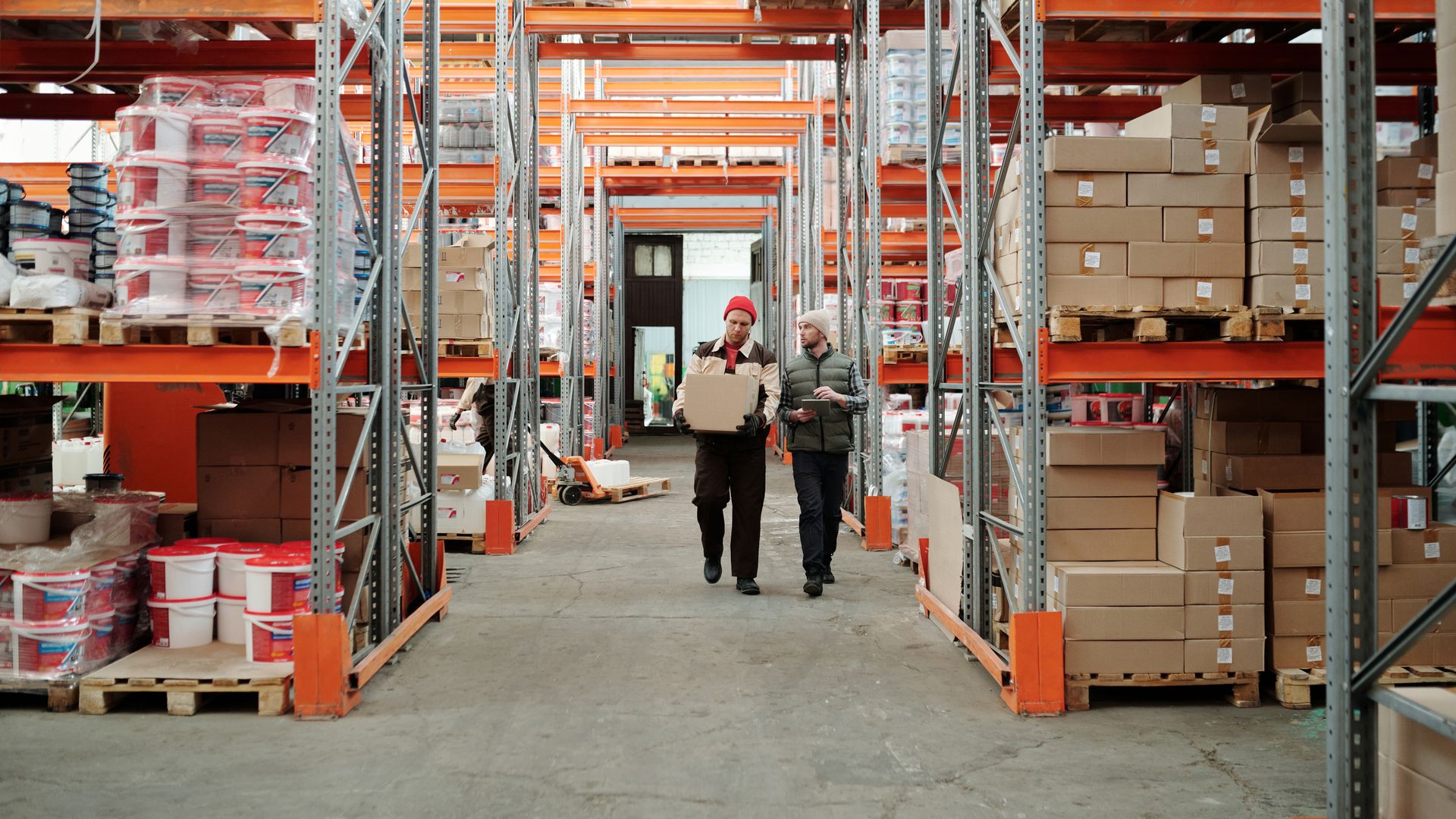
A 3PL for ecommerce is a third-party logistics company that stores your inventory, picks and packs each order, and ships it to the customer under your brand, so you can sell across Shopify, marketplaces, and wholesale without operating a warehouse yourself. Most DTC brands need a 3PL at the point where in-house fulfillment starts costing more in lost growth than it saves in fees: when the packing table is eating the founder's week, when storage runs out, or when delivery speed is losing carts.
Updated September 2026. Every figure below is attributed to a named, dated source. Carrier and marketplace rates change several times a year, so re-check them before you build a budget.
What is a 3PL for ecommerce?
A 3PL for ecommerce is an outsourced fulfillment operator. "3PL" stands for third-party logistics, meaning a company that sits between your brand and your customer and performs the physical work of logistics on your behalf: receiving inbound inventory, storing it, picking and packing orders as they come in, buying and printing carrier labels, and processing returns. An ecommerce 3PL is distinct from a freight broker, which only arranges transportation, and from a bare warehouse, which only rents you space and does not touch your orders.
The category is large and still growing. Grand View Research valued the global third-party logistics market at $1,261.0 billion in 2025 and estimates $1,356.7 billion for 2026, projecting a 9.1% CAGR through 2033 (Grand View Research, Third-party Logistics Market Report, 2026-2033). For a plain-English primer on the terminology, see what 3PL shipping is and our longer explainer on how a 3PL works for ecommerce brands.
How does ecommerce third-party fulfillment work, step by step?
Ecommerce third-party fulfillment runs on a repeatable operational loop. The details below are how the process actually runs on a warehouse floor, not a simplified diagram.
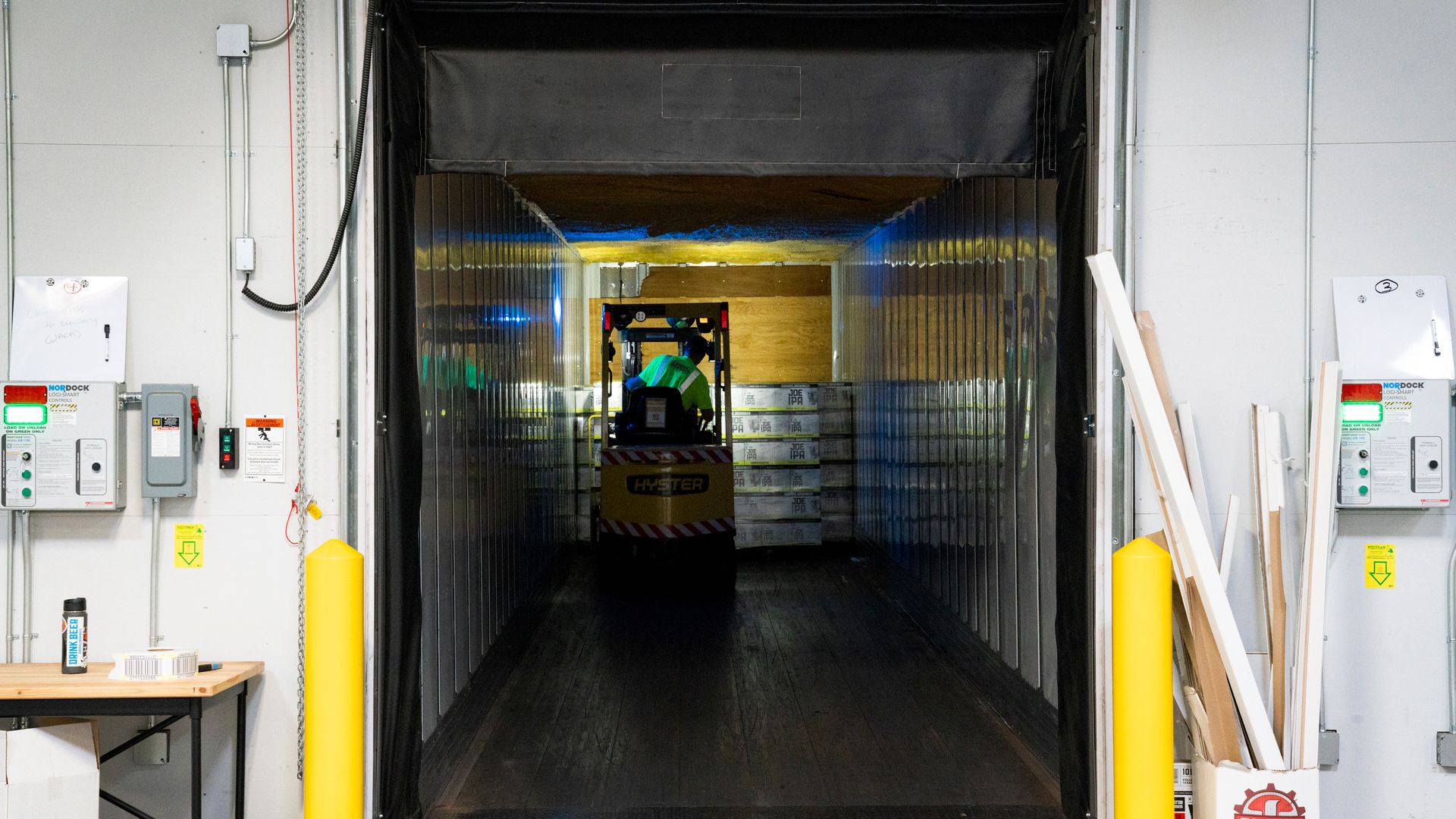
- Inbound and receiving. You send an advance shipping notice (ASN) with carton counts, SKU-level quantities, and expected arrival date. The 3PL books a dock appointment, counts against the ASN, flags shortages and damages, and putaway happens to specific bin locations. Typical contracted receiving turnaround is 24 to 72 business hours from dock to sellable.
- Storage and inventory sync. Units live in pallet, shelf, or bin locations depending on velocity. Cycle counts keep on-hand numbers honest between full physical inventories.
- Order ingestion. Orders flow from your storefront and marketplaces into the 3PL's warehouse management system automatically, usually within minutes.
- Pick and pack. Pickers work batched or wave-based pick paths, then packers scan each unit against the order to verify accuracy, add inserts or custom packaging, and cube the carton.
- Ship. Rate shopping selects the carrier and service that hits the promised delivery date at the lowest cost, and the order tenders against the day's carrier cutoff.
- Returns. Inbound returns are inspected, graded, and either restocked, refurbished, or dispositioned as damaged.
When does a DTC brand actually need a 3PL?
A DTC brand needs a 3PL when fulfillment stops being a chore and starts being a constraint. In our experience onboarding ecommerce brands at Atomix, the tipping point usually arrives when a founder or a small ops team is spending more hours per week packing than acquiring customers, when the garage or studio has run out of usable rack space, or when peak season demand cannot be absorbed without panic hiring.
Delivery speed is the other forcing function. The 2026 AlixPartners Home Delivery Survey, published 23 June 2026, found that U.S. consumers now expect free delivery in an average of 2.7 days, down from 3.5-plus days in prior years, and that more than 20% of demand is estimated to be at risk when those timing expectations are not met. The same survey found 94% of consumers say free shipping impacts their purchase decisions, and two in three shoppers abandon a cart entirely when shipping fees exceed roughly $10.
Carrier costs push in the same direction. UPS announced a 5.9% general rate increase on 30 October 2025, effective 22 December 2025, and FedEx announced a matching 5.9% average increase effective 5 January 2026. A single-location in-house operation absorbs those increases at list rates; a multi-node 3PL can blunt them with zone reduction and negotiated rates.
What does ecommerce 3PL cost in 2026?
Ecommerce 3PL pricing is unbundled by design, and the line items are consistent across reputable providers: receiving, storage, pick and pack, packaging materials, postage, and any value-added work such as kitting or FBA prep. Fulfill.com's 2026 3PL pricing benchmark, which sources 16 individual fee types, puts standard pick and pack at roughly $2 to $3 per order, storage at $18 to $25 per pallet per month, and the average monthly minimum at $517.
Two cost traps matter more than the headline per-order rate. The first is packaging: a brand shipping a 14-inch mailer for a product that fits a 9-inch mailer pays dimensional weight on every parcel, every day. The second is the monthly minimum, which quietly makes a cheap-looking rate card expensive for a brand under a few hundred orders a month. Model your real order profile, not an average order. Our line-by-line breakdown of how much a 3PL costs in 2026 walks through each fee, and the 2026 ecommerce fulfillment services guide covers what is usually bundled versus billed separately.
3PL vs in-house fulfillment vs FBA: which fits?
There is no universally correct fulfillment model, only a correct model for your channel mix, margin, and stage. The comparison below is the framing we use with brands evaluating the three options.
| Factor | In-house fulfillment | Ecommerce 3PL | Amazon FBA |
|---|---|---|---|
| Cost structure | Fixed: rent, labor, equipment, retail-rate postage | Variable: per order, per pallet, per unit received | Variable: per-unit fulfillment fee plus referral and storage fees |
| Brand control | Total control of packaging, inserts, unboxing | High: custom packaging, inserts, and kitting supported | Low: Amazon-branded box, no inserts |
| Delivery speed | Limited by one location and one carrier cutoff | Multi-node networks cut zones and transit days | Fastest to Prime customers, limited off-Amazon |
| Scalability at peak | Poor: requires hiring and space you carry year-round | Strong: capacity and labor flex with volume | Strong, subject to inventory storage limits |
| Channel coverage | Any channel, if you build the integrations | DTC, marketplaces, retail and B2B routing | Amazon-first; off-Amazon via Multi-Channel Fulfillment |
| Best fit | Pre-launch, very low volume, or highly custom products | Growing DTC and omnichannel brands | Amazon-dominant catalogs with simple, fast-moving SKUs |
FBA economics moved again this year. Amazon told sellers on 15 October 2025 that 2026 FBA fees would increase by an average of $0.08 per unit sold, or less than 0.5% of an average item's selling price, with changes effective 15 January 2026 and no new FBA fee types introduced. That is a modest change on its own, but it stacks on referral fees, storage fees, and the loss of brand control in the box. Our guide to choosing the best ecommerce fulfillment model compares the three paths in more depth.
How do 3PL ecommerce integrations work?
A 3PL ecommerce integration is the data pipe between your storefront and the warehouse. In practice it is a two-way sync: orders and shipping selections flow into the 3PL's warehouse management system, and inventory levels, tracking numbers, and fulfillment statuses flow back to your store. A native integration with Shopify, WooCommerce, BigCommerce, Amazon Seller Central, TikTok Shop, or a marketplace aggregator should be live and passing test orders before your first pallet ships.
Ask specific questions during evaluation rather than accepting a logo wall. Does the integration support partial shipments and split orders? Does it write tracking back fast enough that customers are not emailing support? How are pre-orders, bundles, and subscription renewals handled? Does inventory sync at the SKU level or the aggregate level, and how often? Integrations that only sync nightly will oversell you during a launch, and an oversell on launch day costs far more than any per-order fee.
What should you expect from an ecommerce fulfillment 3PL?
An ecommerce fulfillment 3PL should commit to numbers in writing, not adjectives. The operational commitments worth negotiating are: same-day shipping for orders received before a stated cutoff time on business days, a defined receiving turnaround from dock to sellable, a published order accuracy rate, and inventory accuracy measured against cycle counts. Ask which specific carrier cutoffs each facility hits, and ask for a zone map showing how many days your top five destination states sit from the warehouse.
Returns deserve equal scrutiny. The National Retail Federation and Happy Returns reported on 15 October 2025 that an estimated 19.3% of online sales would be returned in 2025, against a 15.8% all-retail rate totaling $849.9 billion. In the same report, 49% of retailers said they planned to increase their focus on third-party logistics partners to manage holiday returns. Confirm who pays for return labels, how fast returns are graded and restocked, and whether restocked units re-enter sellable inventory automatically. Our checklist of what ecommerce brands should expect from a 3PL partner and the list of questions to ask a 3PL before signing cover the contract terms most brands miss. If you are already with a provider and it is not working, read how to switch 3PL providers before you give notice.
Frequently asked questions
What does 3PL stand for?
3PL stands for third-party logistics. A 3PL is an outside company that handles storage, order fulfillment, shipping, and returns on a brand's behalf, rather than the brand performing that work itself.
Is an "ecom 3PL" different from a general 3PL?
Yes, meaningfully. An ecom 3PL is built for high-volume, single-unit and small-parcel orders that arrive continuously from online storefronts, so it optimizes for pick speed, parcel rate shopping, and storefront integrations. A general or industrial 3PL is usually built around pallet-level and freight movements for wholesale and retail distribution, with slower, larger, scheduled shipments.
How is a 3PL different from a fulfillment center?
A fulfillment center is a physical building where orders are processed. A 3PL is the company that operates fulfillment, often across several fulfillment centers, and supplies the software, carrier relationships, and account support around the physical operation.
How many orders a month do you need before an ecommerce 3PL makes sense?
There is no universal threshold, but the practical trigger is the monthly minimum on a 3PL rate card. With average monthly minimums around $517 in 2026 per Fulfill.com's benchmark, a brand shipping a very small number of orders may pay more in minimums than it saves in labor. The economics generally turn once fulfillment labor, retail-rate postage, and storage together exceed what a 3PL would charge for the same volume.
How long does onboarding with an ecommerce 3PL take?
Onboarding typically runs two to six weeks, depending on SKU count and integration complexity. The sequence is contract and rate card, storefront integration and test orders, SKU setup with dimensions and barcodes, an inbound ASN and receiving appointment, then a controlled cutover where a small share of orders routes to the 3PL before full volume moves.
Can a 3PL handle Amazon FBA prep and DTC orders at the same time?
Many ecommerce 3PLs do both. The 3PL receives your bulk inventory once, ships DTC orders directly to consumers, and separately preps, labels, and sends FBA shipments into Amazon's network on your schedule. This keeps one pool of inventory and one set of receiving costs instead of two.
Do 3PLs handle ecommerce returns?
Most ecommerce 3PLs handle reverse logistics, and this is increasingly a core requirement rather than an add-on. Returns arrive at the warehouse, are inspected and graded, and are restocked, refurbished, or written off. Confirm the grading criteria and the turnaround time, because slow returns processing directly reduces sellable inventory.
Does a 3PL make delivery faster than in-house fulfillment?
Usually, for two reasons. A 3PL with multiple facilities places inventory closer to demand, which reduces carrier zones and transit days, and a 3PL ships enough volume to hold negotiated carrier rates and later daily cutoffs than a single small shipper can get. Both effects shorten the gap between the order being placed and the package arriving.

.svg)
.svg)
.svg)