Supplement & Nutraceutical Fulfillment: What Vitamin and Wellness Brands Need From a 3PL
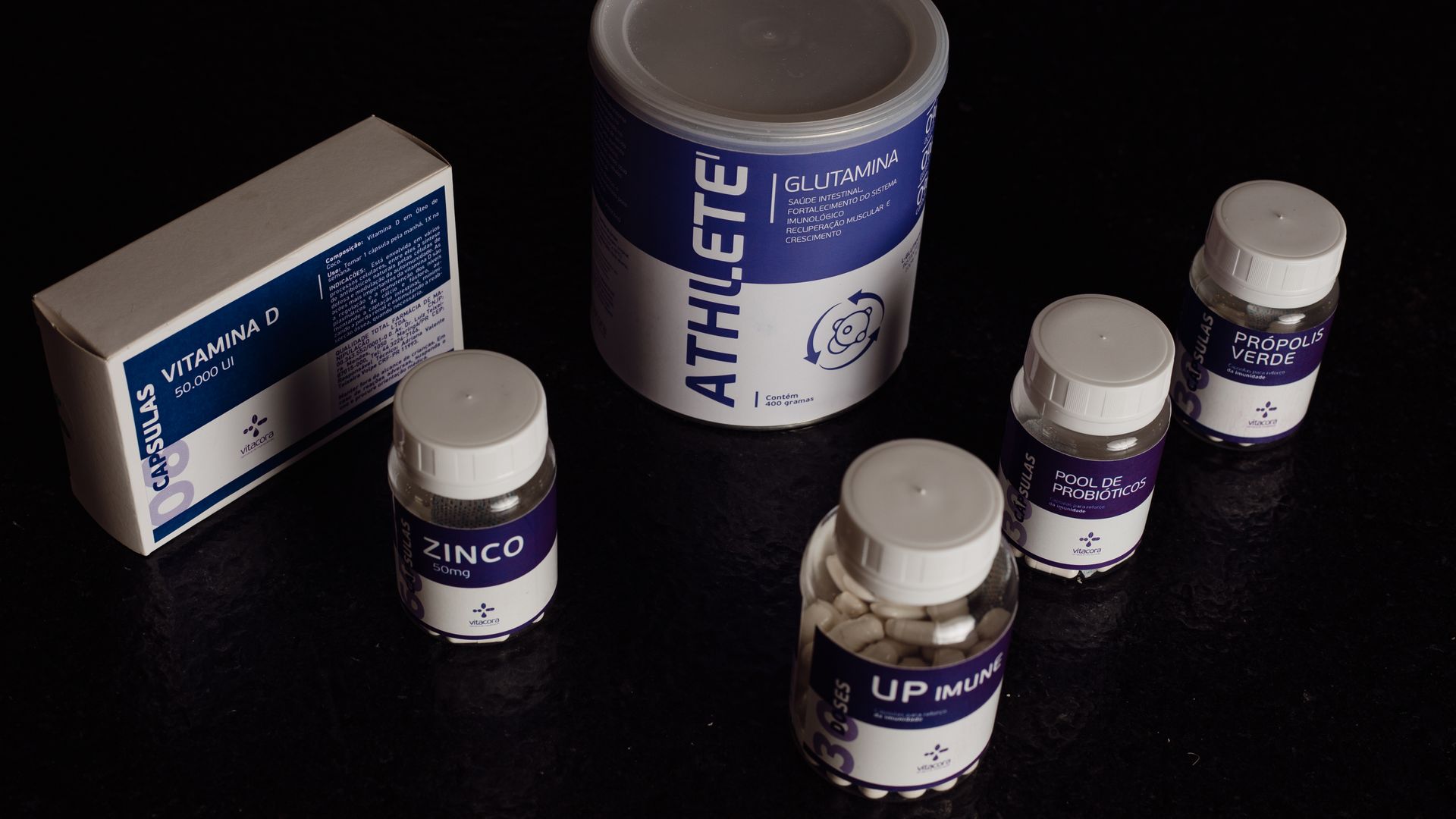
Supplement and nutraceutical fulfillment is 3PL warehousing built for products that expire. A supplement-ready 3PL captures lot number and expiration date at receiving, picks first-expired-first-out (FEFO), holds stock under controlled temperature and humidity, and keeps lot-to-order records so a recall can be traced. FDA's dietary supplement cGMP rules and food facility registration set the baseline every warehouse must meet.
Updated September 2026 with current FDA 21 CFR Part 111 holding and recordkeeping citations, the FSMA 204 traceability enforcement date, the October—December 2026 food facility registration renewal window, Amazon's expiration-dated inventory rules, and 2025 US supplement channel data.
What is supplement and nutraceutical fulfillment?
Supplement fulfillment is third-party logistics tailored to dietary supplements and nutraceuticals. On top of standard pick, pack, and ship, supplement fulfillment adds lot and expiration capture at receiving, FEFO picking, controlled storage conditions, and distribution records that connect a specific lot to a specific order. If you sell vitamins, protein, greens powders, gummies, functional beverages, or wellness SKUs direct to consumers, supplement fulfillment is the category of service you need. If 3PL is new to you, start with what a 3PL is and how it works for ecommerce brands.
The category is big enough to have its own operating standards. Nutrition Business Journal's 2026 Supplement Business Report put US supplement sales at $72.88 billion in 2025, up 5.5%, with ecommerce at 24.3% share and growing faster than any other channel (Nutraceuticals World reporting on NBJ, 2026). That means more supplement volume is moving through parcel networks and subscription programs every year — and more of it is moving through 3PL warehouses rather than distributor DCs.
Why do supplements need different fulfillment handling than other ecommerce products?
Supplements differ from durable goods in four ways that change warehouse behavior:
- Every unit has a shelf life. Supplement inventory has to rotate by expiration date, not by whatever pallet is closest to the dock.
- Every unit belongs to a lot. Lot identity is what makes a targeted recall possible instead of a full-catalog pull.
- Storage conditions are regulated, not optional. FDA requires that dietary supplements be held "under appropriate conditions of temperature, humidity, and light so that the identity, purity, strength, and composition… are not affected" (21 CFR 111.455(a), eCFR, current).
- Retailers enforce their own date thresholds. Marketplace rules can reject a shipment months before the product is actually expired.
Which FDA rules apply to a supplement 3PL warehouse?
A 3PL that holds dietary supplements is not just a landlord for boxes. Several FDA requirements land directly on the warehouse:
| Requirement | What the rule says | What the supplement 3PL must actually do |
|---|---|---|
| Holding conditions — 21 CFR 111.455 (eCFR, current) | Hold components and dietary supplements under appropriate temperature, humidity, and light, and under conditions that do not lead to mixup, contamination, or deterioration. | Monitored ambient or climate-controlled zones, pest program, segregated lot locations, no mixed-lot commingling in a pick face. |
| Distribution conditions — 21 CFR 111.470 (eCFR, current) | Distribute dietary supplements under conditions that will protect them against contamination and deterioration. | Protective packing for glass, liquids, and gummies; heat-aware carrier and transit-time selection in summer lanes. |
| Written procedures and distribution records — 21 CFR 111.475 (eCFR, current) | Keep written procedures for holding and distributing operations, plus records of product distribution. | Documented SOPs an auditor can read, and a WMS export showing lot, expiration, order, and ship date. |
| Record retention — 21 CFR 111.605 (eCFR, current) | Keep required written records for 1 year past the shelf life date if shelf life dating is used, or 2 years beyond the date of distribution of the last batch. | Retention policy on lot and distribution data that outlives the product, not a 90-day log rotation. |
| One-up, one-back records — 21 CFR 1.360 (eCFR, current) | Nontransporters holding food must retain source and recipient records for 2 years for shelf-stable goods, 1 year for goods that spoil within 6 months, and 6 months for goods that spoil within 60 days. | Receiving records tied to the supplying manufacturer and outbound records tied to the recipient, retained on the correct clock per SKU type. |
| Facility registration — Federal Food, Drug, and Cosmetic Act sec. 415 (FDA, Biennial Registration Renewal guide) | Facilities that manufacture, process, pack, or hold food must register with FDA and renew between October 1 and December 31 of each even-numbered year, using an FDA-recognized unique facility identifier. | Ask for the registration number and confirm renewal status — 2026 is an even-numbered year, so the current window is October 1 to December 31, 2026. |
Note that 21 CFR Part 111 is a cGMP rule written for manufacturing, packaging, labeling, or holding operations. The holding and distributing obligations in Subpart M are the ones that most often show up in a 3PL contract and a brand's quality audit. For the warehouse-side view of registration and food-grade handling, see what makes a warehouse food-grade and FDA-registered.
What about FSMA 204 traceability?
FDA's Food Traceability Rule under FSMA section 204 adds enhanced recordkeeping and key data element capture for foods on FDA's Food Traceability List. FDA has stated it will not enforce the rule before July 20, 2028 (FDA, 2026). Whether a given supplement SKU falls in scope depends on the Food Traceability List and the exemptions in 21 CFR 1.1305, so confirm scope for your specific formulas rather than assuming. Either way, the lot-level data model a supplement 3PL should already be running is the same data model FSMA 204 asks for.
How does a 3PL manage lot tracking and expiration dates for supplements?
Lot and expiration handling is the single capability that separates a supplement 3PL from a generic one. In practice it looks like this:
- Capture at receiving, not at picking. Every inbound pallet is scanned to a lot number and an expiration date before it is putaway. A receiving process that records only "1,200 units of SKU-401" has already destroyed your traceability.
- License-plate or lot-level locations. Two lots of the same SKU live in separate locations so a picker cannot mix them in one bin.
- FEFO allocation in the WMS. First-expired, first-out beats FIFO for supplements, because the oldest received lot is not always the soonest to expire — especially when a contract manufacturer ships a short-dated run.
- Expiration thresholds and quarantine rules. Stock inside a defined window is blocked from allocation and flagged for markdown, donation, or disposal instead of shipping to a customer.
- Lot-to-order reporting. Given a lot number, the 3PL should return every order, address, and ship date within minutes, not days — that is the report that turns a hypothetical recall into a bounded one.
- COA handling. Certificates of analysis for each lot should be filed against the received lot record, so quality can tie a shipped unit back to its test results.
Our deeper walkthrough of the mechanics lives in lot tracking and expiration date management at a 3PL, and inbound setup is covered in how to send inventory to a 3PL.
What expiration-date thresholds do retailers and marketplaces require for supplements?
Your own shelf-life math is not the binding constraint — the channel's is. Amazon's FBA policy for expiration-dated inventory is the strictest widely published example.
| Channel | Date rule | Operational consequence |
|---|---|---|
| Amazon FBA (Amazon Seller Central, expiration-dated FBA inventory) | On arrival at the fulfillment center, units must have enough remaining shelf life for the product to be consumed in full plus an additional 90 days. | A 180-day-supply SKU needs roughly 270 days of remaining life at receipt — so short-dated production runs get routed to DTC, not FBA. |
| Amazon FBA labeling (Amazon Seller Central) | The expiration date must appear on the individual unit and on the outer shipping box in 36-point or larger font, and each box may contain only one expiration date per ASIN. | Your 3PL's FBA prep line must sort by date before boxing, and print oversized date labels on cartons. |
| DTC ecommerce | No regulator-set minimum, but customers judge it. Most supplement brands set an internal floor of 6–12 months remaining at ship. | Set the FEFO quarantine threshold in the WMS so short-dated units are never auto-allocated to a subscription order. |
| Retail and wholesale | Buyer-specific date codes are written into the purchase order or vendor agreement. | Your 3PL needs to pick by date to a PO-level rule, and produce a lot/date manifest with the ASN. |
Marketplace and retail rules are exactly why FEFO is not a nice-to-have. If you sell across DTC, Amazon, and retail simultaneously, read multi-channel inventory management next.
Do supplements need temperature- and humidity-controlled storage?
Some do, and the rule is condition-based rather than category-based. 21 CFR 111.455(a) ties holding conditions to whether identity, purity, strength, and composition are affected, which is why the practical answer depends on the formula:
- Live-culture probiotics and some enzymes typically require refrigerated or tightly controlled ambient storage per the manufacturer's label.
- Gummies soften, fuse, and bloom in heat, which is a summer-lane problem as much as a warehouse problem.
- Powders and effervescents cake and clump in high humidity, especially in unconditioned space in humid regions.
- Liquids, tinctures, and softgels are sensitive to freeze-thaw cycling and to light.
- Tablets and capsules in HDPE bottles are usually stable at controlled room temperature.
Ask a prospective 3PL for the actual monitored ranges in each zone and how excursions are logged and escalated, not just whether the building is "climate controlled." If any part of your line is refrigerated or frozen, pair this with cold storage and temperature-controlled fulfillment and cold chain fulfillment for perishables.
How does a supplement 3PL handle a recall?
A recall is a stopwatch problem. The sequence a supplement-ready 3PL should be able to run:
- Freeze the lot. Block the affected lot from allocation across every channel and put a physical hold on the locations holding it.
- Count what is still on hand. Report on-hand units by lot and location, including units already staged for outbound.
- Produce the downstream list. Every order, customer, and ship date that received the lot — the "records of product distribution" required by 21 CFR 111.475(b)(2).
- Produce the upstream list. The receiving record tying the lot back to its manufacturer, which is the one-up half of the 21 CFR 1.360 requirement.
- Handle the returns. Recalled inventory has to be received back, segregated, and dispositioned separately from normal returns; see reverse logistics and returns through a 3PL.
Run this as a drill before you need it. Send your 3PL a lot number with no warning and time how long the lot-to-order report takes. If the answer involves a spreadsheet and a warehouse manager's memory, the traceability is not real.
Does a 3PL handle supplement subscriptions and kitting?
Yes, and it matters, because supplements are a subscription-heavy category and ecommerce is the fastest-growing supplement channel per NBJ's 2025 data cited above. A supplement 3PL should support recurring subscription orders, monthly batch releases, and kitting — bundling multiple SKUs into a starter kit, gift set, or multi-month supply.
Two operator details are easy to miss. First, kits inherit the shortest expiration date among their components, so a kit's sellable date is set by its weakest SKU — your 3PL's kitting process has to record component lots and roll up the earliest date. Second, subscription orders must respect the same FEFO and date-threshold rules as one-time orders; shipping a short-dated bottle to a month-nine subscriber is how churn starts. See subscription box fulfillment at scale and kitting and assembly services. For the broader benefits of outsourcing in consumer-packaged-goods categories, see how 3PLs help CPG brands scale and CPG order fulfillment strategies.
What should a supplement brand look for in a fulfillment 3PL?
- Lot and expiration capture at receiving, enforced in the WMS — not a manual note on a receiving sheet
- True FEFO allocation, with configurable expiration thresholds and automatic quarantine
- A current FDA food facility registration, with the renewal window handled (October 1 to December 31 of even-numbered years)
- Written holding and distribution SOPs and distribution records, per 21 CFR 111.475
- Record retention that meets 21 CFR 111.605 and 21 CFR 1.360 clocks
- Monitored temperature and humidity zones with logged excursions, plus refrigerated capacity if your line needs it
- Lot-to-order recall reporting you can test on demand
- COA filing tied to the received lot
- Tamper-evident seal and induction-seal inspection at pick or pack, with damaged-seal units pulled before they ship
- Subscription, recurring-order, and kitting support with lot roll-up on kits
- Careful handling for glass, liquids, powders, and heat-sensitive gummies
- Multi-node shipping for 1–2 day ground coverage
Bring these to the sales call as questions, not as a wish list. Our full interview script is in questions to ask a 3PL before signing, with selection criteria in how to choose the best fulfillment center for a CPG brand and comparisons in the best 3PL companies for DTC brands.
How much does supplement fulfillment cost, and how does inventory planning change?
Supplement fulfillment is priced like other ecommerce fulfillment — receiving, storage, pick and pack, packaging, and shipping — with a few category-specific line items: lot-controlled receiving, kitting labor, climate-controlled storage at a premium to ambient, and FBA prep with date labeling. See how much a 3PL costs and our order fulfillment pricing page for the line-item breakdown.
Planning changes too. In a category with expiration dates, safety stock has a ceiling as well as a floor: too little and you stock out, too much and you write off short-dated inventory. Size buffers against both risks using our safety stock guide, and weight the calculation toward faster replenishment cycles rather than deep cover.
Frequently asked questions about supplement and nutraceutical fulfillment
What is supplement fulfillment?
Supplement fulfillment is third-party fulfillment built for dietary supplements and nutraceuticals. It adds lot and expiration capture at receiving, FEFO picking, controlled storage conditions, and lot-to-order distribution records on top of standard pick, pack, and ship.
What is FEFO and why does it matter for supplements?
FEFO stands for first-expired, first-out. It ships the soonest-to-expire sellable stock first, which reduces write-offs and gives customers more remaining shelf life. FEFO beats FIFO for supplements because the oldest received lot is not always the soonest to expire.
What FDA rules apply to a warehouse holding dietary supplements?
21 CFR Part 111 Subpart M requires holding supplements under appropriate temperature, humidity, and light and under conditions that prevent mixup, contamination, or deterioration (111.455), distributing them under protective conditions (111.470), and keeping written procedures plus records of product distribution (111.475). Facilities that hold food must also register with FDA under section 415 of the Federal Food, Drug, and Cosmetic Act.
How long must supplement lot and distribution records be kept?
Under 21 CFR 111.605, written records must be kept for 1 year past the shelf life date if shelf life dating is used, or 2 years beyond the date of distribution of the last batch associated with those records. Separately, 21 CFR 1.360 requires nontransporters to hold source and recipient records for 2 years for shelf-stable foods.
When does the FSMA 204 food traceability rule take effect?
FDA has stated it will not enforce the Food Traceability Rule before July 20, 2028. Whether a specific supplement SKU is in scope depends on FDA's Food Traceability List and the exemptions in 21 CFR 1.1305, so confirm scope formula by formula.
How much shelf life does Amazon FBA require on supplements?
Amazon requires that expiration-dated units arriving at a fulfillment center have enough remaining shelf life for the product to be consumed in full plus an additional 90 days. The expiration date must appear on each unit and on the outer box in 36-point or larger font, and each box may hold only one expiration date per ASIN.
Do supplements need temperature-controlled storage?
Some do. Live-culture probiotics and certain enzymes usually need refrigerated or tightly controlled storage, gummies soften in heat, and powders cake in humidity. Tablets and capsules in HDPE bottles are usually stable at controlled room temperature. The requirement is condition-based: hold the product so its identity, purity, strength, and composition are not affected.
Can a 3PL handle supplement subscriptions and kitting?
Yes. Supplement-ready 3PLs support recurring subscription orders, monthly batch releases, and kitting for multi-SKU bundles and multi-month supplies. Kits inherit the earliest expiration date among their components, so the 3PL must record component lots and roll up that date.
Selling supplements direct to consumers? Talk to Atomix about lot capture, FEFO picking, recall reporting, and subscription fulfillment for your wellness brand — or see how we support DTC brands.

.svg)
.svg)
.svg)