Beauty and Cosmetics Fulfillment: What DTC Beauty Brands Need From a 3PL Partner
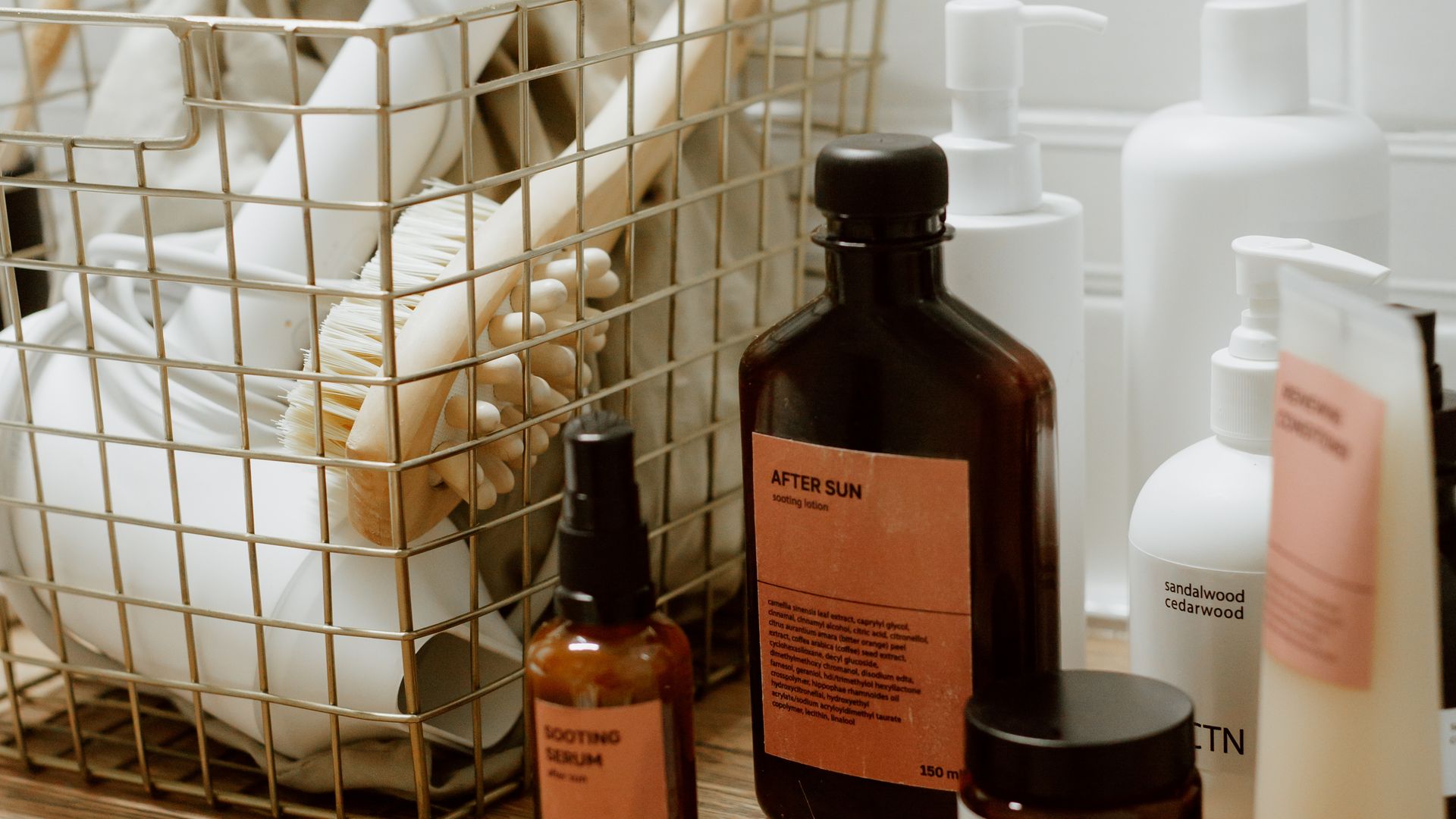
Beauty and cosmetics fulfillment is the storage, pick-and-pack, and shipping of makeup, skincare, and personal care products under rules general 3PLs rarely handle: lot and expiration tracking, FDA-registered facilities, temperature control, fragile glass packing, and ground-only handling for aerosols and alcohol-based formulas. A beauty 3PL should prove all five before you sign.
Updated September 2026 with the first MoCRA biennial facility-registration renewals now coming due, the current status of FDA's delayed cosmetics GMP rule, USPS and DOT ground-only rules for perfume and aerosols, and a MoCRA requirements table.
If a 3PL treats a serum the way it treats a t-shirt, a beauty brand eventually ships expired product, fails to produce lot records when asked, or watches breakage claims eat the margin. This guide covers what a growing beauty brand should require from a fulfillment partner, what the current cosmetics regulations actually say, and the questions to ask before signing a contract.
Why is beauty and cosmetics fulfillment different from regular ecommerce fulfillment?
Most 3PLs are built for durable, non-perishable goods. Beauty products are neither. Beauty and cosmetics fulfillment differs on five operational axes:
- Cosmetics expire and carry batch codes. Serums, sunscreens, and active-ingredient formulas lose efficacy over time, so inventory has to rotate by date and lot, not by whichever pallet is closest to the dock door.
- Cosmetics are federally regulated. The Modernization of Cosmetics Regulation Act of 2022 (MoCRA) is, in FDA's own words, the biggest expansion of its cosmetics authority since 1938, and it added facility registration, product listing, adverse-event recordkeeping, and safety substantiation duties (FDA, Modernization of Cosmetics Regulation Act of 2022).
- Cosmetics are fragile. Glass droppers, pump actuators, pressed powders, and glass fragrance bottles crack, seize, and shatter without format-specific packing.
- Cosmetics are temperature-sensitive. Heat melts balms, separates emulsions, and warps lipstick bullets, and a hot trailer or an uncooled mezzanine damages inventory before it ever ships.
- Some cosmetics are hazmat. Aerosol hairspray, dry shampoo, nail polish, and ethanol-based fragrance are regulated in transport and often cannot fly.
Volume makes this worse, not better. Statista Market Insights estimates online sales will contribute 59.9% of total US Beauty & Personal Care revenue by 2026, meaning most beauty units now move as individual parcels rather than retail pallets, and each one is an opportunity to leak, break, or ship an expired lot.
What do MoCRA and FDA cosmetics rules require in 2026?
MoCRA obligations sit with the "responsible person" (the manufacturer, packer, or distributor whose name appears on the label) and with the facility that manufactures or processes the product. A pure pick-and-pack 3PL that only stores and ships finished goods is generally not a "facility" that must register, but the brand still has to produce records, and the 3PL is where most of those records live. Here is the current state of play.
| Requirement | What it says | Current status (Sept 2026) |
|---|---|---|
| Facility registration | Manufacturers and processors of cosmetics distributed in the US must register each facility with FDA and update within 60 days of a change | In force. FDA exercised enforcement discretion until July 1, 2024 |
| Biennial renewal | Facility registrations must be renewed every two years, keyed to the initial registration date | First renewals came due in 2026; facilities registered by the July 1, 2024 date renew by July 1, 2026 (Wiley, 2026) |
| Product listing | The responsible person must list each marketed cosmetic product and its ingredients with FDA, and update annually | In force; each listing must carry the registration number of the facility where the product is made (FDA) |
| Adverse event records | The responsible person keeps records of adverse events associated with US use of the product | Six years, reduced to three for qualifying small businesses that do not manufacture or process the product (Registrar Corp) |
| Safety substantiation | The responsible person must hold documentation adequately substantiating the safety of each cosmetic product | In force (FDA) |
| Cosmetics GMP rule | MoCRA directed FDA to issue a proposed GMP rule by Dec 29, 2024 and a final rule by Dec 29, 2025 | Delayed. FDA's Unified Agenda now lists cosmetic GMP rulemaking as a long-term action with no proposed date (Foley, March 2026) |
Two practical notes. First, MoCRA exempts certain small businesses from registration and listing, but FDA states that exemption does not extend to products that regularly contact the mucous membranes of the eye, products that are injected, products intended for internal use, or products intended to alter appearance for more than 24 hours (FDA). Eyeliner and long-wear brands should not assume they are exempt. Second, because the GMP rule is still unwritten, "GMP-compliant warehouse" is a marketing claim, not a certification. Ask a 3PL what it actually does: written SOPs, pest control program, segregated quarantine area, temperature logging, and lot-level traceability you can pull on demand.
What should a beauty brand require from a 3PL?
1. Lot and expiration tracking with FEFO rotation
A beauty 3PL should capture the batch or lot code and the expiration or best-by date at receiving, hold them at the license-plate level through putaway, and rotate stock first-expired-first-out (FEFO) so aging inventory ships before fresher stock. Ask two concrete questions: can the WMS flag inventory crossing a shelf-life threshold you set (for example, 90 days to expiry) so it moves to a sampling or markdown pool, and can the 3PL produce every order that received a specific lot in a single export? That second capability is the difference between a targeted recall and a brand-wide one. See lot tracking and expiration date management at a 3PL for how this is set up.
Related but separate: the PAO symbol, the small open-jar icon on many packages showing how many months the product is good after opening. PAO runs from the customer's first use, not from receipt, so it does not drive warehouse rotation the way an expiration date does. Do not let a 3PL substitute one for the other.
2. FDA-registered manufacturing partners and honest warehouse claims
Registration under MoCRA attaches to facilities that manufacture or process cosmetics. If your 3PL does relabeling, decanting, or over-labeling, that can pull it into "processing" territory, so ask directly and get the FDA Establishment Identifier if it claims registration. If it only stores and ships sealed finished goods, ask instead for its recordkeeping: how long it retains receiving, lot, and shipping records, and how fast it can answer a records request tied to an adverse event.
3. Temperature control that is measured, not asserted
Balms, emulsions, wax-based color, and probiotic or vitamin C formulas are the most heat-vulnerable SKUs in beauty. Ask whether the storage area is actively conditioned or merely "climate moderated," whether temperature and humidity are logged continuously, and what the escalation path is when a zone drifts. Ask the same about outbound: summer transit through the Southwest can exceed anything the warehouse ever saw. Cold storage and temperature-controlled fulfillment covers the tiers and what each costs.
4. Format-specific packing for glass, pumps, powders, and liquids
"Fragile handling" is not a protocol. A real beauty packing spec names the SKU format and the method: glass serum bottles get a molded insert or double-wall corrugate with 2 inches of void fill on all sides; pumps and droppers get a clip or a shrink band so they do not depress and leak in transit; pressed powders ship flat with no crush load above them; anything with a screw cap gets an induction seal check at pack-out. Existing guides on shipping makeup safely, preventing damage when shipping cosmetics, and shipping hair care liquids and sprays go deeper, and the ecommerce packaging guide covers box sizing and dim-weight tradeoffs.
5. Kitting for gift-with-purchase, sample sets, and PR boxes
Beauty rarely sells as one unit. Gift-with-purchase thresholds, deluxe sample sets, holiday value kits, and influencer seeding boxes all require a 3PL that can build multi-component kits, hold them as their own SKU, and burn down component inventory correctly. A PR box in particular is a build with tissue, a printed insert, sometimes a handwritten card, and a specific stacking order, and it needs a documented build sheet rather than a verbal handoff. See kitting and assembly 3PL services, and if you run replenishment sets, subscription box fulfillment.
6. Returns handling that protects safety and brand perception
Beauty returns less than most categories, but it does return. NRF's 2025 Retail Returns Landscape puts the overall online return rate at 19.3% of online sales in 2025, with total retail returns of $849.9 billion. The problem in beauty is not the rate, it is that a returned skincare unit cannot go back on the shelf on judgment alone. Your 3PL needs a written disposition rule: factory-sealed and undamaged goes back to sellable stock with its original lot intact; opened, unsealed, or temperature-suspect goes to quarantine or destruction; damaged-in-transit goes to a claims bin with photos. Handling returns for personal care products and reverse logistics through a 3PL cover the workflow.
How should a 3PL ship aerosols, perfume, and other flammable beauty products?
This is where inexperienced 3PLs create liability. Ethanol-based fragrance, aerosol dry shampoo and hairspray, nail polish, and some setting sprays are regulated hazardous materials in transport, and the usual answer is ground-only.
USPS states that perfume, as an ethanol-based flammable liquid, may only be shipped domestically by surface transportation using USPS Ground Advantage unless the mailer holds prior written authorization for domestic air, and caps a single mailpiece at 16 ounces total volume; flammable nail polish is mailable domestically as a consumer commodity, with some formulations restricted to ground (USPS, Shipping Restrictions and HAZMAT, and Publication 52). Separately, a package prepared under the DOT limited quantity exception for ground transport is not authorized for air transport (FedEx, How to ship hazardous materials; see also 49 CFR Part 173).
What that means operationally for a beauty brand:
| Product type | Typical transport treatment | What the 3PL must do |
|---|---|---|
| Aerosol hairspray, dry shampoo, setting spray | Ground only under the DOT limited quantity exception; not authorized for air | Flag the SKU as hazmat in the WMS, apply the limited quantity mark, and block air services at rate shopping |
| Ethanol-based fragrance and perfume | USPS Ground Advantage surface only absent written air authorization, 16 oz per mailpiece | Enforce the volume cap at cart or at pack-out and prevent mixed carts that exceed it |
| Nail polish and polish remover | Mailable as a consumer commodity; some formulations ground only | Hold the SDS and flashpoint on file per SKU before the first shipment |
| Non-flammable creams, serums, powders | Standard ground or air | Normal handling, but keep leak-prone liquids in a sealed bag |
| Candles and wax home fragrance | Standard ground, but heat-sensitive | Seasonal routing and temperature-aware storage; see candle and home fragrance fulfillment |
The failure mode is predictable: a brand launches an aerosol SKU, nobody flags it in the WMS, the rate shopper picks an air service because it was cheapest, and the carrier either rejects the parcel at the hub or fines the shipper. Ask a prospective 3PL how hazmat SKUs are flagged and whether carrier services are hard-blocked at the rating layer. Hair care brands with sprays and aerosols should also read hair care fulfillment for personal care brands.
What does beauty and cosmetics fulfillment cost?
Beauty fulfillment prices on the same components as any 3PL: receiving, storage, pick-and-pack, packaging materials, and shipping. Four things push beauty above a general merchandise baseline: conditioned storage space, heavier protective packaging (which raises dimensional weight, not just material cost), the labor of capturing lot and date at receiving, and kitting hours for GWP and PR builds. Ask for those as named line items rather than folded into a blended per-order rate, or you cannot tell which one is growing. For the full cost structure see how much a 3PL costs in 2026 and order fulfillment pricing.
The real comparison is not sticker price. It is sticker price plus expired-inventory write-offs, breakage claims, hazmat fines, and the cost of a recall you cannot scope because nobody captured lot codes.
What questions should a beauty brand ask a 3PL before signing?
- Does your WMS capture lot codes and expiration dates at receiving, and can you export every order that shipped a specific lot?
- Do you rotate FEFO, and at what shelf-life threshold does inventory get flagged?
- Are you FDA-registered, and do you perform any relabeling or repacking that would make you a processor under MoCRA?
- How long do you retain receiving and shipping records, and how fast can you answer a records request?
- Is storage actively temperature-controlled, and are temperature and humidity logged?
- What are your written packing specs for glass bottles, pumps, droppers, pressed powders, and liquids?
- How are hazmat SKUs flagged, and are air services hard-blocked for aerosols and ethanol-based fragrance?
- Can you build kits, GWP sets, and PR boxes from a documented build sheet, and how is component inventory decremented?
- What is your written disposition rule for returned beauty product?
For a broader version of this list, see questions to ask a 3PL before signing.
The bottom line
Beauty and cosmetics fulfillment rewards specialization. The brands that avoid trouble pick a partner that captures lot and date at receiving, logs its temperatures, packs to a written spec per format, blocks air services on hazmat SKUs, and can produce records the same week you ask. If you are evaluating a move, start with what a 3PL is and how it works, then how to choose the best fulfillment center for a CPG brand, the best 3PL companies for DTC brands, and how ecommerce brands choose the right 3PL partner. When you are ready to move stock, how to send inventory to a 3PL walks through the transfer, and DTC fulfillment covers the wider category. The original 3PL pricing guide remains a useful companion on rate structure.
Frequently asked questions about beauty and cosmetics fulfillment
Does a beauty 3PL have to be FDA registered under MoCRA?
MoCRA facility registration applies to facilities that manufacture or process cosmetics distributed in the US, not automatically to a 3PL that only stores and ships sealed finished goods. If the 3PL relabels, repacks, or decants product, ask directly whether it is registered and request its FDA Establishment Identifier. Either way, confirm how long it retains lot and shipping records.
When do MoCRA facility registrations have to be renewed?
Facility registrations must be renewed every two years, with the renewal date keyed to the initial registration date. Facilities that registered by the July 1, 2024 enforcement date face their first renewal by July 1, 2026, according to a 2026 Wiley alert. Registration content must also be updated within 60 days of any change, per FDA.
What is FEFO in beauty fulfillment?
FEFO is first-expired-first-out. Rather than shipping the oldest-received stock first as FIFO does, the 3PL ships the units that will expire soonest, which matters for skincare, sunscreen, and active-ingredient formulas. FEFO only works if the warehouse captured expiration dates and lot codes at receiving.
Can a 3PL ship perfume and aerosol hairspray by air?
Usually not. USPS states perfume, an ethanol-based flammable liquid, may only ship domestically by surface transportation via USPS Ground Advantage without prior written air authorization, capped at 16 ounces per mailpiece. Packages prepared under the DOT limited quantity exception for ground are not authorized for air transport, which covers most aerosol beauty SKUs.
How do beauty brands prevent shipping expired cosmetics?
They use a 3PL whose WMS holds expiration dates at the lot level, rotates FEFO, and flags inventory crossing a shelf-life threshold the brand sets so short-dated stock moves to sampling, bundles, or markdown before it becomes a write-off.
What is a PAO symbol and does a 3PL need to track it?
PAO stands for period after opening, shown as an open-jar icon with a number of months. It runs from the customer's first use, so it does not drive warehouse rotation. A 3PL should rotate on the printed expiration or best-by date and lot code, not the PAO figure.
How should a 3PL handle returned beauty products?
With a written disposition rule rather than picker judgment: factory-sealed and undamaged units return to sellable stock with the original lot intact, opened or unsealed units go to quarantine or destruction, and transit-damaged units go to a claims bin with photographs.
What does beauty and cosmetics fulfillment cost compared with general merchandise?
It prices on the same components (receiving, storage, pick-and-pack, materials, shipping) but runs above a general merchandise baseline because of conditioned storage, heavier protective packaging that raises dimensional weight, lot and date capture labor at receiving, and kitting hours for gift-with-purchase and PR builds. Ask for those as separate line items.

.svg)
.svg)
.svg)